


The National Basketball Association season is in its nascent stages, yet the intensity of the early-season schedule is already testing the depth and resilience of rosters across the league. With seven games slated for this evening, the betting landscape reflects a unique combination of high-octane offensive starts and the inevitable fatigue associated with early-season back-to-back scheduling. As teams navigate injury reports and rest management, professional handicappers and fans alike are scrutinizing the movement in betting lines to identify value in an increasingly volatile market.
Detroit Pistons at Philadelphia 76ers: The Impact of Roster Management
The Philadelphia 76ers enter Sunday’s contest following a high-energy performance on Saturday, where they secured a 127-116 victory against the Milwaukee Bucks to move to 3-0 on the season. Central to that win was Joel Embiid, who notched a triple-double—posting 28 points, 11 rebounds, and 10 assists. However, the physical toll of 36 minutes on the court suggests that Philadelphia head coach Nick Nurse will likely opt for load management, resting Embiid for the second leg of this back-to-back set.
This decision, combined with the lingering uncertainty surrounding LeBron James—who sat out Saturday’s game due to back discomfort—has created a fascinating dynamic in the betting market. Historically, Philadelphia would be a formidable home favorite; however, the spread has shifted significantly toward the Detroit Pistons. This movement reflects a broader skepticism regarding the 76ers’ ability to maintain intensity while playing their fourth game in just six days.
Detroit, currently 2-0, faces its own set of hurdles. The team is managing injury reports involving Jalen Duren, sidelined by a hamstring strain, and Ausar Thompson, who is nursing an ankle issue. Despite these absences, the Pistons possess a distinct scheduling advantage, entering the game with an extra day of rest compared to their counterparts.
Analytical models suggest that Detroit’s success last season—specifically their four-game sweep of the season series against Philadelphia—continues to influence both team confidence and market sentiment. With Cade Cunningham assuming primary playmaking duties, the Pistons have demonstrated a cohesion that is currently being favored by sharp money. The current line movement, which has seen the Pistons move from underdogs to narrow favorites at -1.5, underscores a tactical bet on endurance over pure roster talent.
Toronto Raptors at Minnesota Timberwolves: The Defensive Shift
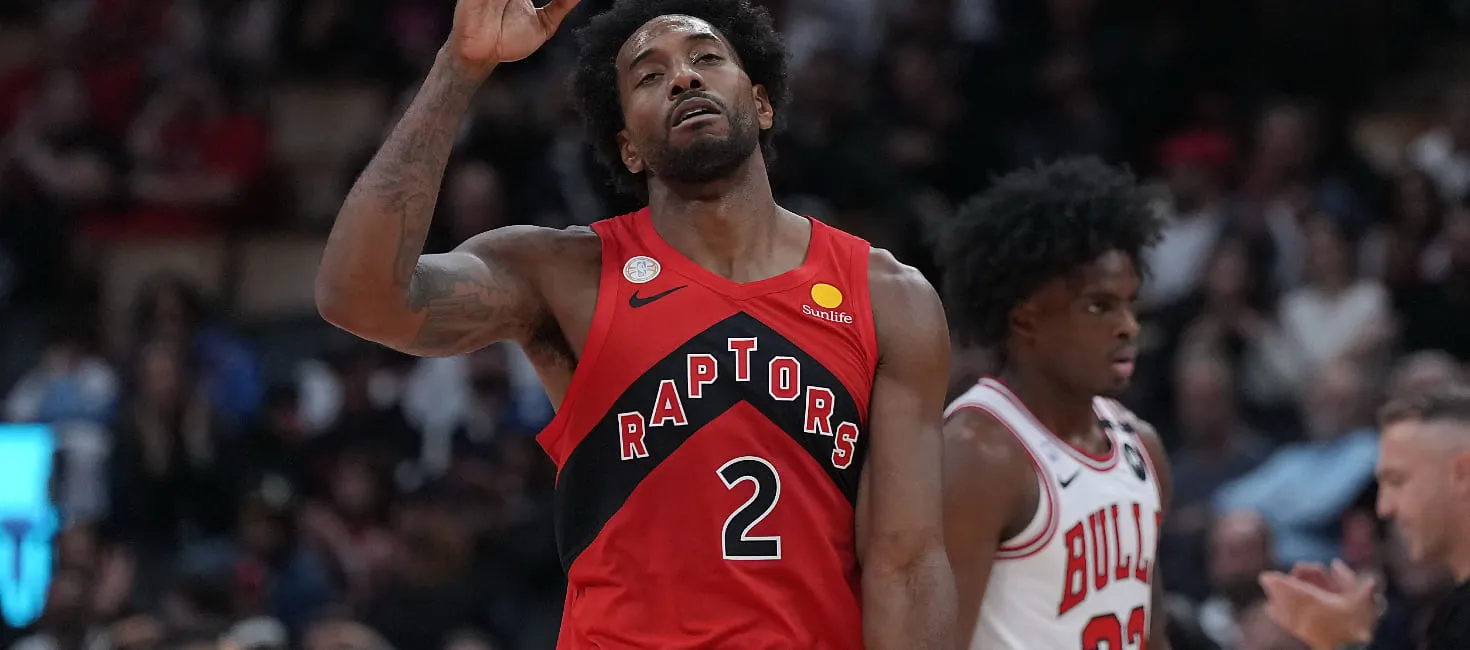
In Minneapolis, the Toronto Raptors prepare to face the Minnesota Timberwolves in a contest that serves as a litmus test for the Raptors’ early-season defensive resurgence. Toronto has redefined its identity over the first two games of the season, holding opponents to an average of just 97 points per game. Their 135-92 dismantling of the Chicago Bulls, followed by a disciplined 112-102 road win against the Washington Wizards, has propelled them to the top of the league’s defensive efficiency rankings.
The acquisition of Kawhi Leonard has transformed the Raptors’ perimeter defense, providing a veteran anchor that complements the versatile output of Scottie Barnes. The duo’s ability to disrupt passing lanes and switch across multiple positions has forced opponents into low-percentage looks, a strategy that will be put to the ultimate test against Minnesota’s Anthony Edwards.
Minnesota enters the game with a 2-0 record and a reputation for offensive firepower. Yet, the betting market remains cautious. Initially opening as 2.5-point favorites, the Timberwolves have seen the line tighten to 1.5 points, signaling significant respect for Toronto’s defensive metrics. This adjustment is notable; rarely do visiting teams see such favorable movement against high-scoring Western Conference opponents early in the year.
The implication for tonight’s matchup is clear: the outcome will likely hinge on whether Minnesota’s offense can break through Toronto’s perimeter pressure. If the Raptors continue to prioritize defensive rotations and ball containment, they possess the necessary offensive weapons to keep the game within a single possession, making the +1.5 spread a focal point for those looking to capitalize on Toronto’s current momentum.
Broader Implications of Early-Season Scheduling
The current NBA landscape is defined by the tension between talent and the grueling nature of the 82-game schedule. The trend of resting star players during back-to-back games, as seen with Philadelphia’s approach to Embiid, has become a standard operating procedure for front offices focused on post-season health. For the betting community, this requires a shift from evaluating teams based solely on personnel to analyzing them based on the "rest-advantage" metric.
Data from the first two weeks of the season indicates that teams with a rest advantage are covering the spread at a rate nearly 8% higher than their counterparts. This trend is exacerbated in October, as teams are still conditioning their starters for full-game rotations. The Detroit-Philadelphia game serves as a perfect case study: a talented home team fighting fatigue versus a well-rested, if slightly depleted, road team.

Furthermore, the defensive dominance shown by the Raptors illustrates a shift toward smaller, more switchable lineups. Coaches across the league are increasingly prioritizing lateral quickness and defensive IQ over traditional rim protection, a trend that could lead to lower-scoring games across the league as defenses catch up to the offensive explosion of the previous season.
Fact-Based Analysis and Strategic Outlook
When evaluating the total betting landscape for October 25th, it is imperative to note that sample sizes remain small. While the Raptors’ defensive rating is impressive, it is derived from only two games—one of which was against a struggling Bulls offense. Similarly, while the Pistons swept the 76ers last season, roster turnover and coaching changes make historical data less predictive than it would be in mid-season.
The professional consensus for tonight involves a cautious approach. Betting on the spread in games involving teams on back-to-backs requires monitoring injury reports until the final minutes before tip-off. Specifically, the status of LeBron James in the Philadelphia-Detroit matchup could cause further volatility in the line. Should James be ruled out, the line may shift further toward Detroit, potentially pushing them to -2.5 or higher. Conversely, a surprise return for a key rotation player could render current spreads obsolete.
Ultimately, the early NBA season is not just a test for the players on the court, but for the analysts and bettors attempting to interpret the noise of small-sample statistics. The focus must remain on situational factors: schedule congestion, injury management, and tactical shifts in defensive philosophy. As these teams continue to establish their identity through the end of October, the consistency of these trends will provide the foundation for the remainder of the campaign. Whether one is looking at the grit of the Detroit backcourt or the defensive structure of the Toronto wing players, the objective remains the same: identify where the market has overreacted to the immediate past and find the value hidden in the fatigue and rhythm of a long season.
As tip-off approaches, observers should expect continued movement in the lines, particularly as team trainers finalize active rosters. In this environment, the ability to act on verified data—such as official injury reports released 30 minutes before game time—will remain the most significant edge for any participant in the sports betting landscape. The games scheduled for this evening are more than mere contests; they are indicators of how the league will evolve as it moves deeper into the autumn schedule.
