

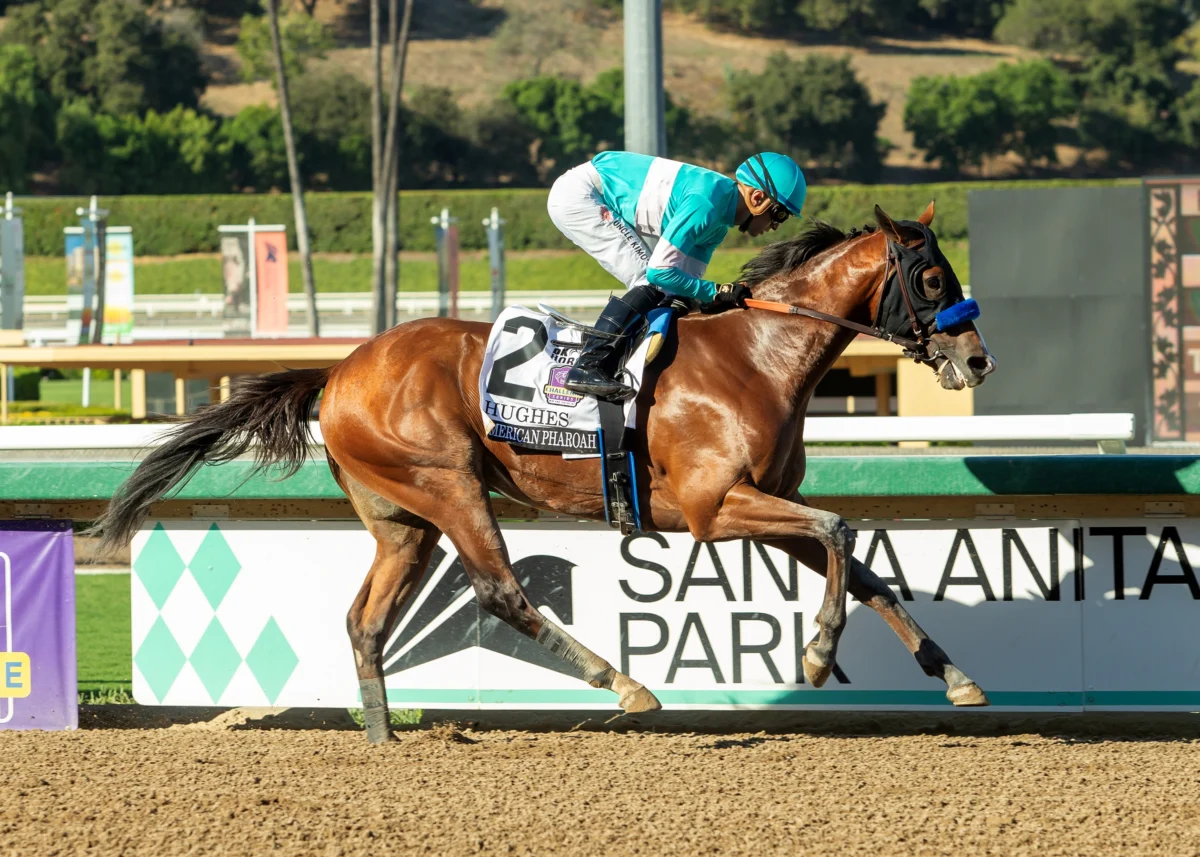
With the 43rd annual Breeders’ Cup World Championships looming on the horizon, the atmosphere at Churchill Downs crackled with anticipation on October 25 as Hall of Fame trainer Bob Baffert put four of his top prospects through their final paces. As the racing world shifts its focus toward the championship venue at Keeneland, Baffert’s quartet—Explora, Hughes, Miss Monica, and Salahudin—demonstrated the form and fitness required to compete on the sport’s most prestigious global stage.
The Breeders’ Cup, often referred to as the "World Championships of Thoroughbred Horse Racing," represents the zenith of the calendar year. Featuring $30 million in purses and awards, the two-day event serves as a definitive proving ground where top-tier international bloodstock converges to crown seasonal champions. For Baffert, a perennial powerhouse at the event, these final workouts are the culmination of months of meticulous conditioning, strategic race placement, and careful management of his stable’s elite talent.
A Morning of Speed at Churchill Downs
The morning session was characterized by sharp, efficient drills as the horses took advantage of the cool autumn air at the historic Louisville oval.
Explora, the graded stakes-winning daughter of a prolific sire line, clocked four furlongs in :48 under the guidance of jockey Jose Ortiz. Owned by the high-profile partnership of Mike Pegram, Karl Watson, and Paul Weitman, the 3-year-old filly is being pointed toward the $1 million Breeders’ Cup Filly and Mare Sprint (G1). Having secured a signature victory in the Test Stakes (G1) at Saratoga earlier this summer, Explora showed resilience in her most recent outing, a runner-up finish in the Dogwood Stakes (G3) on September 19. "She cruised around there really nicely," Baffert noted following the breeze. "Jose has been on her and working her all along. It’s a tough race, and she’ll have to step up, but I like the way she’s going into it."
The buzz surrounding the 2-year-old division intensified with the presence of Hughes, a son of the legendary stallion Into Mischief. Undefeated in four starts with a combined margin of victory exceeding 24 lengths, Hughes is shaping up to be a formidable favorite for the $2 million Breeders’ Cup Juvenile (G1). With Rafael Bejarano in the irons, Hughes covered four furlongs in :47 1/5. Baffert acknowledged the colt’s unique temperament, noting, "When I work him, I always keep a horse on his outside just to keep him engaged. By himself, he can be a little lazy. He gets over the ground really well. He’s very athletic."
Miss Monica, another unbeaten prospect in the Baffert barn, also impressed, clocking :47 for the half-mile distance. The daughter of Early Voting is preparing for the $2 million Breeders’ Cup Juvenile Fillies (G1). The challenge for the filly lies in the distance; she is set to tackle two turns for the first time on October 30. Despite the uncertainty of the distance, Baffert remains optimistic, stating that he has seen no physical or behavioral indicators that the filly would struggle with the added ground.
Completing the Baffert rotation was the undefeated Salahudin, a 2-year-old son of Uncle Mo. Working under jockey Florent Geroux, who recently returned to the saddle following a seven-week recovery from broken ribs, Salahudin covered the half-mile in :47. The colt, a winner of the Iroquois Stakes (G3) on September 12, represents the type of developing talent that often blossoms late in the season. Baffert highlighted the horse’s progression, remarking, "He’s a horse that’s getting better. Every week he’s blossoming."
Rhetorical and the Turf Contingent
Beyond the Baffert barn, the morning also featured a key workout for Rhetorical, a 5-year-old gelding owned by Gary Barber, Cheyenne Stable, and Wachtel Stable. Trained by Will Walden, Rhetorical covered a half-mile in :49 1/5.
Rhetorical is a seasoned veteran of the Breeders’ Cup, having finished fourth in the 2024 Breeders’ Cup Mile (G1T) at Del Mar. Following a dominant performance in the Turf Mile Stakes (G1T) at Keeneland on October 3 and an earlier victory in the Turf Classic Stakes (G1T) at Churchill Downs, the gelding enters this year’s championship with significant momentum.
"We’ll ship to Keeneland tomorrow," Walden said. "It’ll be business as usual as far as training goes into the race. I think he’s going into the race this year with a little more poise than he did last year. He’s a little more relaxed when he needs to be."
Implications for the Breeders’ Cup
The stakes for these trainers and owners are exceptionally high. The Breeders’ Cup is not merely a collection of races; it is a financial and reputational engine that dictates stallion values, broodmare prospects, and Eclipse Award voting.
For the 2-year-olds like Hughes and Salahudin, a victory in the Juvenile division often serves as a precursor to a career on the Triple Crown trail. The speed figures clocked on October 25 suggest that these horses are peaking at the right time. For established performers like Explora and Rhetorical, the Breeders’ Cup is the final opportunity to solidify a claim for an end-of-year championship title.
Logistical Timeline and Next Steps
The administrative machinery of the Breeders’ Cup now shifts into high gear. Official entries for the 43rd edition of the World Championships are scheduled to be taken on October 26. Following the finalization of the fields, a mandatory arrival protocol will take effect. All domestic runners participating in the championship events must be stabled at Keeneland by 11:00 a.m. on October 27.
This window of time is critical for trainers, who must manage the stress of shipping, track acclimation, and final pre-race vet checks. As the horses transition from their home bases at Churchill Downs to the specific conditions of the Keeneland surface, the focus for Baffert and his peers will turn to light exercise, maintenance of health, and the strategic planning of race-day tactics.
Historical Context and Analysis
The Breeders’ Cup has evolved significantly since its inception in 1984. Originally conceived as a one-day, seven-race event, it has expanded to two days and 14 races, drawing global interest from Europe, Japan, and the Middle East. The depth of the field this year, as evidenced by the high-quality workouts at Churchill Downs, reflects the continued investment in American Thoroughbred racing.
The performance of Baffert’s horses is particularly noteworthy given the trainer’s history of success at the event. By keeping his horses at Churchill Downs for their final works rather than shipping them immediately, Baffert is utilizing the track’s familiar training surface to maximize the horses’ confidence. The decision to use different jockeys for different horses—Ortiz, Bejarano, Talamo, and Geroux—also highlights the depth of the rider colony and the collaborative effort required to prepare a horse for a championship-level exertion.
As the industry looks ahead, the narrative of the 2024 Breeders’ Cup will be defined by these specific preparations. Whether it is the raw, undefeated speed of Hughes and Salahudin or the seasoned, tactical prowess of Rhetorical, the final works at Churchill Downs have set the stage for what promises to be a highly competitive and historic weekend of racing. With the fields set to be finalized and the horses arriving at Keeneland, the racing community now waits for the gates to open, where the final results will settle the debates of the season.
