

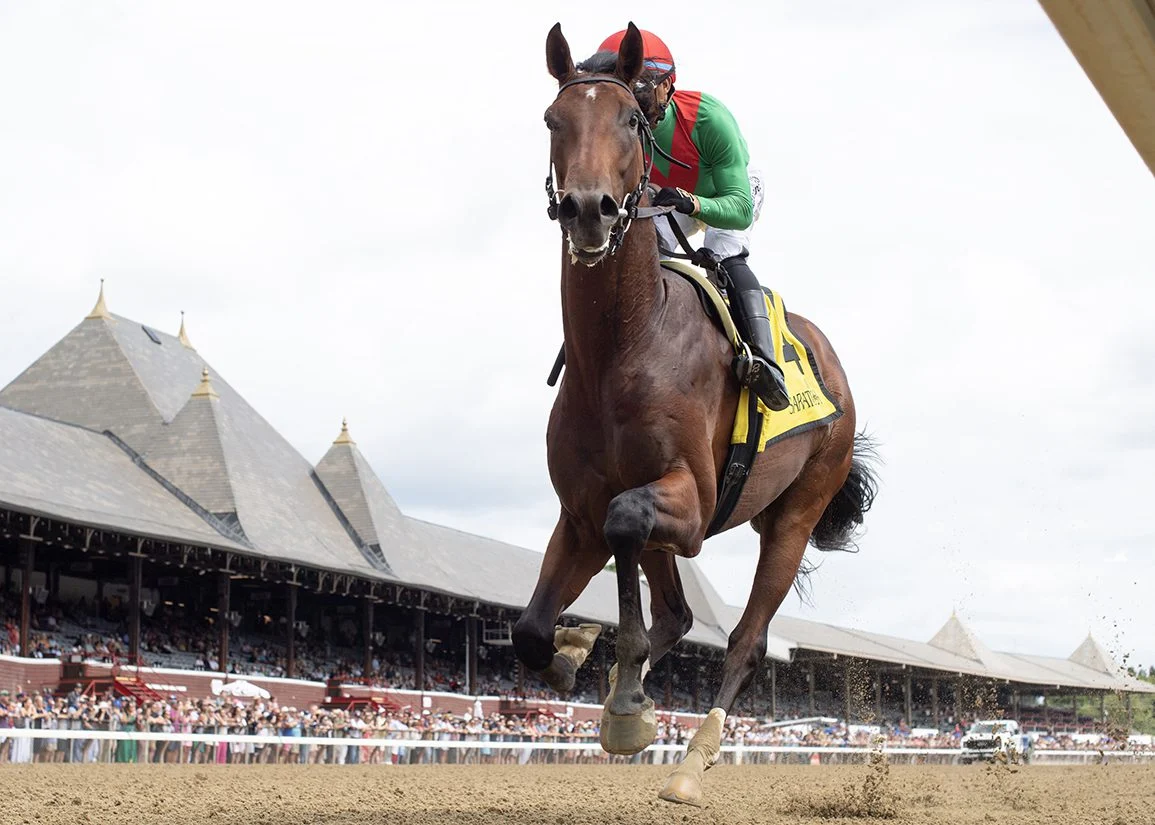
The landscape of American Thoroughbred racing is currently captivated by the emergence of U.S.S. Valor, a colt whose dominant maiden victory has ignited discussions regarding the 2027 Kentucky Derby trail. Barry Irwin, the long-time principal of Team Valor International, provided an in-depth assessment of the colt’s potential during an appearance on the TDN Writers’ Room podcast, presented by Keeneland. As the racing industry pivots toward the fall Grade I circuit, the spotlight remains firmly fixed on the sophomore-to-be, who is slated to contest the GI Champagne Stakes at Belmont Park this Saturday.
The Rise of U.S.S. Valor: From Debut to Contender
U.S.S. Valor, a son of the prolific sire War of Will, has transitioned rapidly from a promising prospect to a leading contender for juvenile honors. His professional trajectory began with a third-place finish in his career debut—a race hampered by a troubled trip that obscured his true ability. However, the colt’s subsequent outing at Saratoga Race Course fundamentally altered his public perception.
Winning by a commanding 13 1/4 lengths, U.S.S. Valor registered a 105 Beyer Speed Figure, a mark rarely achieved by maiden winners at that stage of their development. This performance, which earned him the status of a TDN Rising Star, serves as the cornerstone for the growing anticipation surrounding his participation in the Champagne Stakes. Irwin, who famously campaigned the 2011 Kentucky Derby winner Animal Kingdom, noted that the pressure surrounding U.S.S. Valor is unique, even when compared to the high-stakes environment of his past successes.
“I knew he was a good horse, and the anxiety leading up to that race was like nothing I have ever experienced,” Irwin stated during the podcast. He elaborated on the psychological toll of managing a high-potential horse, noting that his sleep patterns and overall stress levels have been significantly impacted by the anticipation of the colt’s sophomore season. Irwin acknowledged the inherent risk of a “bounce”—a common phenomenon where a horse fails to replicate a peak performance following an exhaustive effort—but remains confident in the horse’s tactical maturity, noting that even with his greenness in the stretch, the colt demonstrated a superior level of natural ability.
Historical Context and Strategic Planning
The transition from a maiden victory to a Grade I test like the Champagne Stakes represents a significant leap in class. Historically, the Champagne Stakes has served as a pivotal stop for prospective Derby contenders, offering a proving ground for speed and stamina over a one-mile distance.
Irwin’s approach to the upcoming race reflects a long-term strategy. While he acknowledges the existence of "Derby fever," he maintains a disciplined outlook, focusing on the development of the horse rather than the immediate prestige of the Triple Crown. His experience with Animal Kingdom—a horse that displayed versatility and late-blooming potential—provides a blueprint for how Team Valor approaches the classic trail. By keeping the colt on a measured schedule, Irwin aims to mitigate the physical and mental wear associated with the rigorous training required for the spring classics.
Critical Perspectives on the HISA Framework
Beyond the discussion of his latest protégé, Irwin utilized the platform to address systemic issues within the industry, specifically the progress and enforcement of the Horseracing Integrity and Safety Authority (HISA). As a vocal proponent of reform, Irwin has consistently advocated for a more rigorous approach to anti-doping and medication control.
While Irwin was instrumental in the legislative efforts that led to the creation of HISA, he expressed measured frustration regarding the current state of enforcement. He emphasized that the primary goal of the organization must be the active pursuit and exclusion of individuals who continue to circumvent regulations. "I’m still a fan of HISA and the idea of HISA, but there’s a lot about it that I don’t like," Irwin noted. "I don’t think they’re really going after the people that are cheating."
Irwin’s concerns underscore a broader sentiment among stakeholders who believe that the integrity of the sport is linked to the transparency and efficacy of its governing bodies. He argued that until the industry demonstrates a decisive shift in how it handles repeat offenders and those who associate with questionable training practices, the public perception of the sport will remain compromised. His preference for racing horses in Europe, where he maintains a significant stable, is, in part, a reaction to the persistent challenges regarding medication policies and the competitive environment in the United States.
Weekly Performance Analysis and Industry Trends
The podcast also featured a broader analysis of the current racing climate, highlighting notable performers who are shaping the fall season. Among the "Fastest Horses of the Week" were Liam Smith, a winner at Santa Anita, and Dragoon Guard, who secured a victory in the GII Lukas Classic. Both horses earned 107 Beyer Speed Figures, highlighting the depth of talent currently competing in middle-distance dirt races.
The editorial team, including Randy Moss, Bill Finley, and Zoe Cadman, provided additional context on industry trends, such as the commitment of connections to keep high-performing mares like Nitrogen in training through their 5-year-old season. This trend is viewed as a positive development for the sport, as it allows fans to develop long-term connections with individual horses, a factor often cited as essential for the continued growth of Thoroughbred racing’s popularity.
Furthermore, the discussion touched upon the training success of Saffie Joseph Jr., who has maintained a high win percentage throughout the current season. The ability of such trainers to consistently produce competitive results in graded stakes events remains a key talking point in the lead-up to the Breeders’ Cup and other year-end championships.
Implications for the Future of the Sport
The discourse initiated by Irwin serves as a microcosm of the challenges and opportunities facing Thoroughbred racing in late 2026. The intersection of individual brilliance—represented by horses like U.S.S. Valor—and systemic integrity—represented by the ongoing evolution of HISA—defines the current era of the sport.
As U.S.S. Valor prepares for the Champagne Stakes, the expectations placed upon him are not merely about his physical performance, but about his role as a potential ambassador for the next generation of racing. For Barry Irwin, the stakes extend beyond the winner’s circle. The industry remains at a crossroads where the quality of the competition must be matched by a commitment to the highest standards of integrity.
The upcoming weekend at Belmont Park will provide a clearer picture of whether U.S.S. Valor can live up to the substantial promise he displayed at Saratoga. Regardless of the outcome, the dialogue surrounding his career serves as a reminder of the enduring passion for the sport and the constant, often difficult, pursuit of excellence that characterizes the Thoroughbred industry. The results of the upcoming Grade I events will undoubtedly shape the narrative for the remainder of the year and provide a foundation for the 2027 racing calendar, as owners, trainers, and regulators continue to navigate the complexities of a changing sport.
