

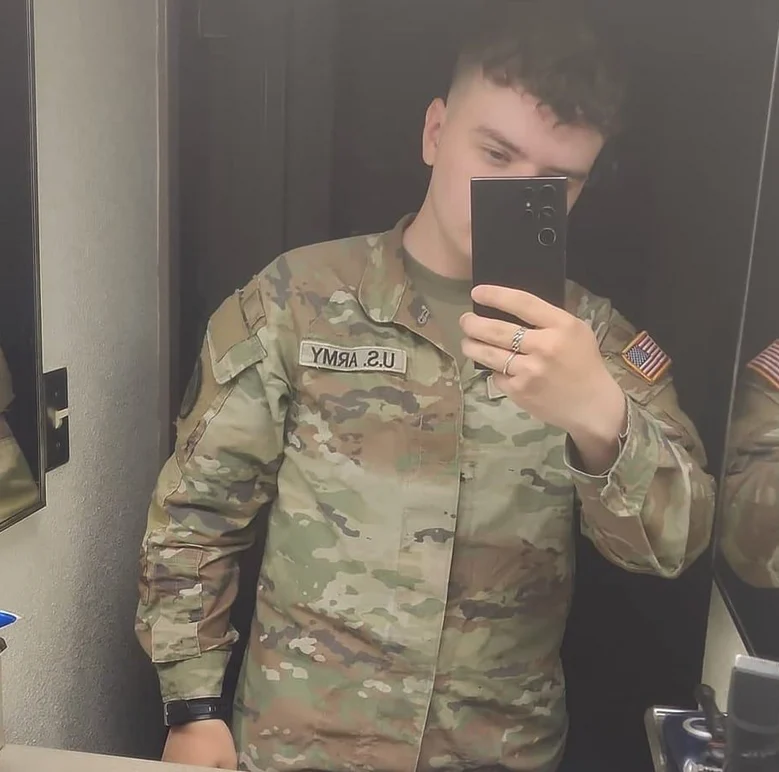
Cameron John Wagenius, a 22-year-old U.S. Army soldier, has been sentenced to 70 months in federal prison following a complex investigation into a series of high-profile cyberattacks that compromised the sensitive metadata of over 100 million AT&T customers. Wagenius, who operated under the alias "Kiberphant0m" while stationed at a military installation in South Korea, was ordered by a Seattle federal judge to pay $294,978 in restitution. His sentencing marks the conclusion of a high-stakes investigation that spanned multiple federal agencies, highlighting the evolving risks posed by "insider threats" within the military’s digital infrastructure.
The charges against Wagenius stemmed from his involvement in a wide-reaching criminal enterprise that leveraged insecure credentials and a lack of multi-factor authentication (MFA) on Snowflake, a prominent cloud data storage provider. By exploiting these vulnerabilities, Wagenius and his co-conspirators gained unauthorized access to data belonging to several major corporate clients.
A Chronology of the Breach and Subsequent Investigation
The timeline of the criminal activity accelerated throughout 2024, culminating in a series of digital extortion attempts that drew international attention.
In mid-2024, the group behind the "Kiberphant0m" persona began systematically downloading metadata from the breached Snowflake accounts. This metadata—which included call and text records, timestamps, and duration information—provided a granular look into the communication habits of millions of individuals. By October 2024, the group began publicly boasting about the theft on various cybercrime forums, targeting AT&T and other global telecommunications companies, including portions of Verizon’s business infrastructure.
The digital footprints left by the attackers eventually led researchers at KrebsOnSecurity to hypothesize in November 2024 that the culprit was a U.S. service member stationed in East Asia. This intelligence was pivotal, as it enabled federal law enforcement to narrow their search parameters. By December 2024, Wagenius was taken into custody, leading to his swift indictment on multiple counts of computer fraud and extortion.
Following his arrest, the scope of the conspiracy became clear. Federal prosecutors revealed that Wagenius did not act alone. He was supported by a network of experienced cybercriminals, most notably Kenneth Schuchman, a 28-year-old from Vancouver, Washington, who had previously achieved notoriety for his role in operating the "Satori" botnet. Other key figures in the conspiracy included Conor Riley Moucka, an Ontario resident who pleaded guilty in August 2026, and John Erin Binns, an American currently residing in Turkey who is also a suspect in the 2011 breach of T-Mobile.
The Anatomy of an Insider Threat
The involvement of a soldier with secret security clearance transformed a standard cybercrime investigation into a matter of national security concern. Paul Russell, a resident agent in charge at the Defense Criminal Investigative Service (DCIS), underscored the gravity of the situation.
"We don’t often get leads where there’s an active duty soldier with a secret clearance who’s creating hacking tools and trafficking in data," Russell stated. "It was very serious from jump street, just because it was unique, it was an insider threat, and we weren’t sure what we were dealing with."
The investigation was a collaborative effort involving the FBI, the Army Criminal Investigative Division (CID), and the U.S. Secret Service. The primary concern for these agencies was not merely the financial theft, but the potential for the compromise of national security secrets. After AT&T allegedly paid a $370,000 Bitcoin ransom to the group, the extortionists betrayed the agreement. In a move that escalated the severity of the case, "Kiberphant0m" released what he claimed were internal call logs for then President-elect Donald Trump and Vice President Kamala Harris, alongside documents purported to be stolen from the National Security Agency (NSA).
Continued Malfeasance During Incarceration
Even after his arrest and while awaiting sentencing, Wagenius demonstrated a persistent commitment to probing cybersecurity vulnerabilities. A sentencing memorandum filed on September 19, 2025, revealed that Wagenius attempted to exploit the Bureau of Prisons (BOP) computer network.
Using the email accounts of other inmates, Wagenius attempted to perform "prompt injection" attacks on commercial AI tools. His goal was to bypass the safety protocols of these AI systems to obtain technical instructions for privilege escalation, Windows 10 vulnerabilities, and even instructions for constructing improvised radio antennas within a prison environment. Prosecutors noted that he frequently framed these inquiries as research for a book, a tactic commonly used by hackers to manipulate generative AI models into producing restricted or malicious code.
While the government found no evidence that these attempts led to a successful breach of the BOP’s internal systems, the behavior significantly influenced the court’s view of his potential for recidivism.
Financial Reality vs. Perceived Threat
Despite the massive volume of data stolen and the high-profile nature of the targets, the financial yield of the operation was remarkably low. Federal records indicate that Wagenius generated only approximately $1,500 in total profit from the sale of stolen data. This discrepancy between the scale of the damage and the personal financial gain serves as a chilling reminder of the disproportionate impact a single motivated individual can have on global digital stability.
The sentencing memo summarized the government’s position: "While Wagenius was not particularly financially successful as a cybercriminal, he both intended to and caused significant harm to numerous individual victims, U.S. companies, and the U.S. government."
Implications for Corporate and Military Security
The case of Cameron Wagenius serves as a foundational case study for the modern cybersecurity landscape. The vulnerabilities exploited—specifically the failure to mandate multi-factor authentication on cloud storage platforms—remain a critical blind spot for many organizations.
For the telecommunications industry, the breach underscored the extreme sensitivity of metadata. While the content of calls may remain encrypted, the pattern of communications—who is talking to whom, when, and for how long—can be highly revealing and potentially dangerous when leaked at scale.
For the Department of Defense, the "Kiberphant0m" case has triggered a reevaluation of how personnel with security clearances are monitored for unauthorized digital activity. The ease with which an active-duty soldier was able to pivot from military duties to international cyber-extortion has forced a shift toward more robust internal monitoring systems.
Furthermore, the integration of AI into the hacker’s toolkit—even while incarcerated—signals a new frontier in threat intelligence. As AI tools become more accessible, the barrier to entry for performing complex, technical cyberattacks is lowering, necessitating more sophisticated defensive AI and human oversight.
The sentencing of Wagenius brings a measure of justice to the millions affected by the breach, but it also serves as a stark warning. As digital infrastructure continues to underpin every facet of national and personal life, the intersection of human motivation and technical vulnerability remains the most significant variable in the security equation. The case against Wagenius and his co-conspirators is now largely resolved, but the legislative and technological responses to the "Kiberphant0m" breaches will likely shape cybersecurity policy for years to come.
