


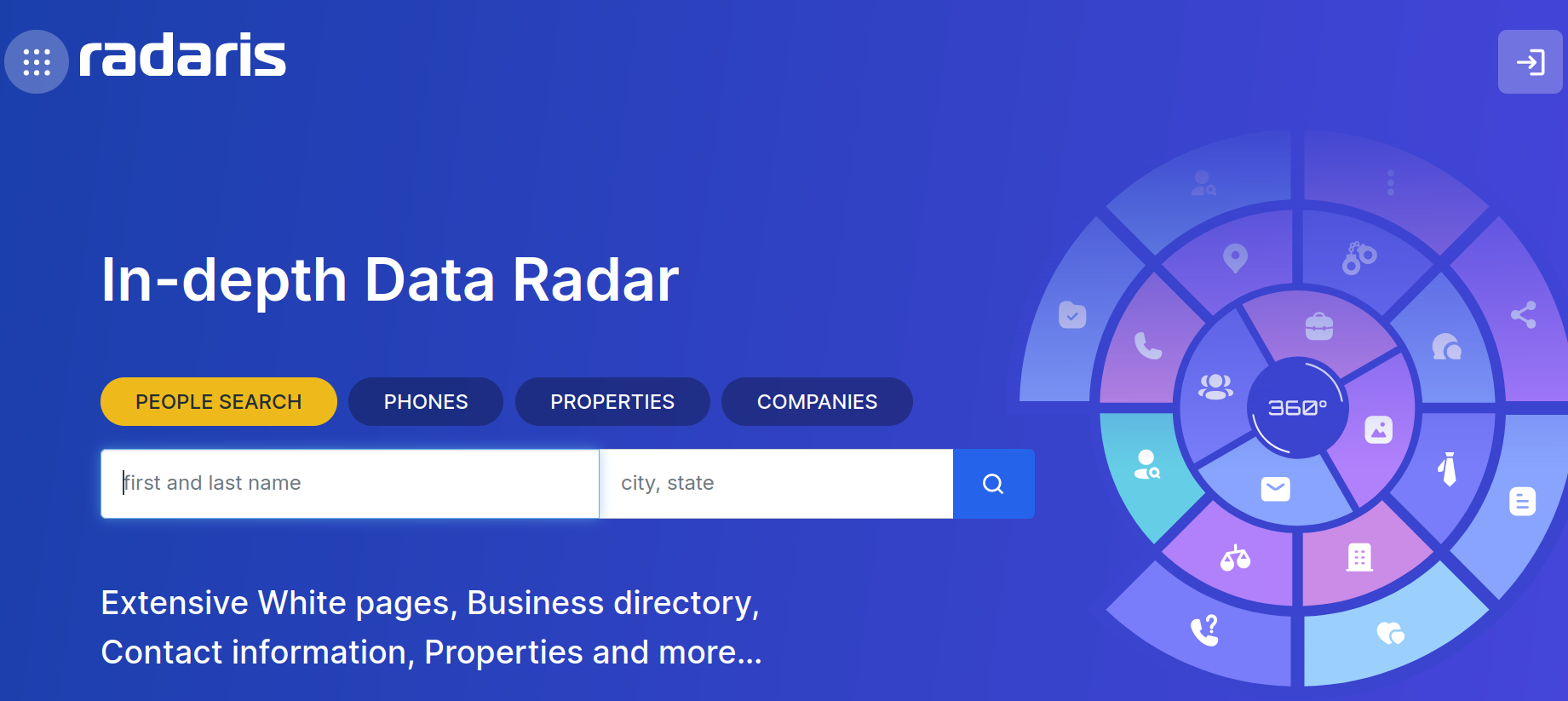
The consumer data broker Radaris.com has finally faced the long-anticipated consequences of its persistent refusal to honor privacy removal requests, resulting in a landmark court-ordered transfer of its primary web domain. For years, the site operated as a centerpiece of a sprawling, opaque empire of people-search services, seemingly shielded by complex corporate structures and aggressive legal tactics. However, a recent ruling in a New Jersey court has shattered that facade. As a direct result of ongoing litigation regarding violations of Daniel’s Law—a New Jersey statute designed to protect the personal information of law enforcement, judicial officials, and their families—a judge has ordered that Radaris.com and more than a dozen associated domains be transferred to the plaintiffs, Atlas Data Privacy Corp. This development marks a significant escalation in the battle between privacy advocates and the multi-billion-dollar data brokerage industry.
The Anatomy of a Legal Siege
The litigation, initiated by Atlas Data Privacy Corp in February 2024, centers on the systematic failure of Radaris to comply with Daniel’s Law. This legislation empowers state law enforcement personnel, government officials, judges, and their immediate families to demand the permanent erasure of their personal information from commercial databases. Crucially, the law imposes civil penalties of $1,000 per violation for companies that ignore or stonewall these removal requests.
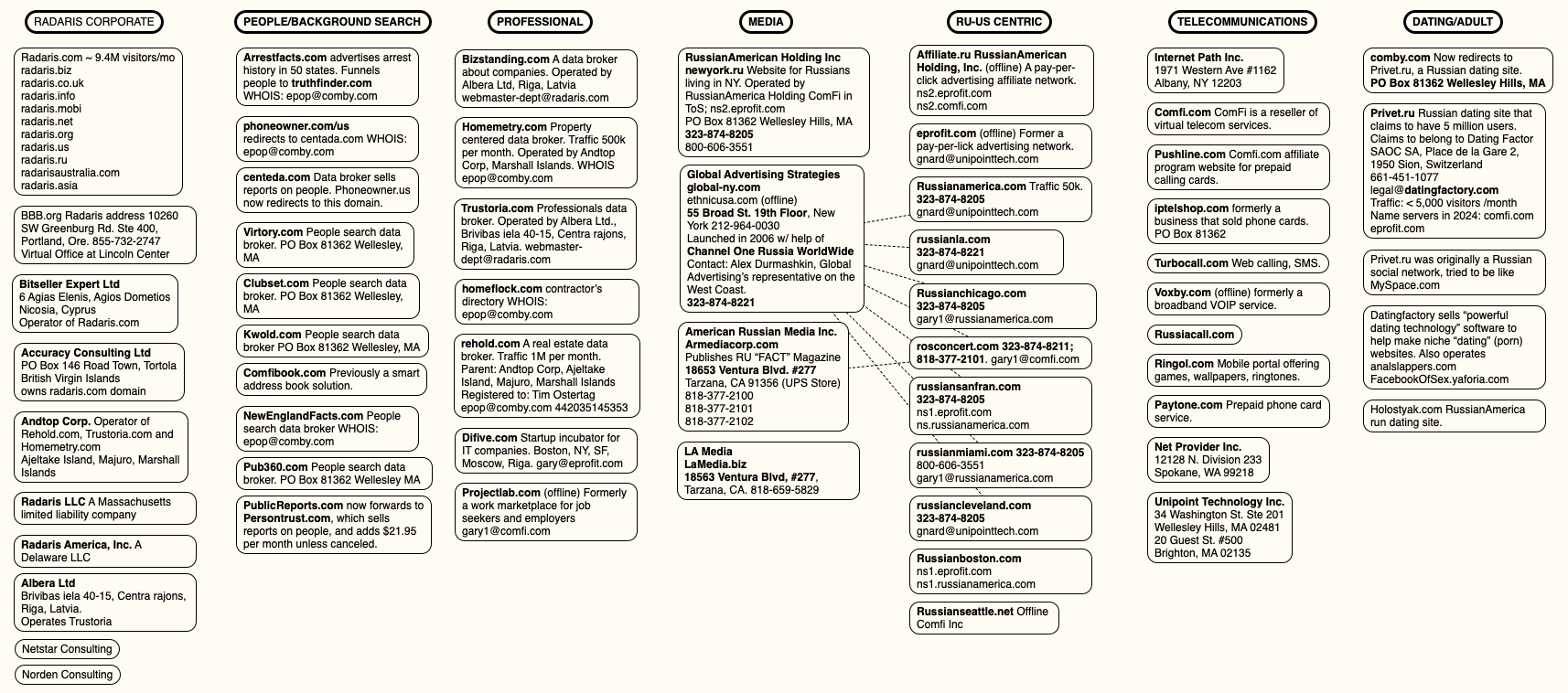
For years, the operation behind Radaris, controlled by Russian-born brothers Igor and Dmitry Lubarsky, utilized a strategy of obfuscation to evade accountability. By shifting ownership between various shell entities—ranging from Cyprus-based firms to entities registered in the Marshall Islands, the British Virgin Islands, and the Seychelles—the operators sought to make service of process nearly impossible. This "island-hopping" phase was characterized by constant updates to terms of service and the strategic abandonment of defunct corporate entities, a tactic that successfully delayed legal judgment for over a decade.
A Chronology of Evasion and Confrontation
The legal pressure against the Lubarsky brothers intensified throughout 2024 and 2025 as investigative reporting exposed the inner workings of their network. In March 2024, scrutiny revealed that Radaris had been operating under the guise of a fictitious CEO named "Gary Norden." Subsequent investigations confirmed that the company’s legal counsel, Val Gurvits of the Boston Law Group, had admitted to the invention of the pseudonym, which had been used in press releases to solicit investment capital.
The legal struggle reached a turning point in June 2025, when Atlas re-filed its lawsuit, broadening the scope to include an expanded list of Radaris-affiliated data brokers. Matt Adkisson, CEO of Atlas, noted that the defense employed a predictable playbook: late-stage appearances, procedural delays, and claims that the plaintiffs had failed to serve the "actual" owners of the various domains.
The court’s decision to transfer the domains to Atlas followed a pattern of behavior that mirrored a 2017 class action loss. In that instance, Radaris failed to contest a $7.5 million default judgment, only for the company to later challenge the enforcement by claiming the judgment was directed at the wrong corporate entity. By the time the plaintiffs in that case attempted to collect, the operator of Radaris had shifted from Bitseller Expert Limited to Andtop Company, a Marshall Islands entity. This time, however, the New Jersey court determined that the defendants had been afforded ample opportunity to defend their position and had consistently opted to obstruct the judicial process.
The Financial Engine of the Data Brokerage Web
Internal documents obtained during discovery, totaling over 10,000 emails, provide a rare window into the financial and operational reality of the Radaris family of companies. These documents confirm that entities such as Radaris America, Inc., Bitseller Expert Limited, and Veripages, Inc. are not independent businesses, but rather centralized operations managed by a single group based in the Boston area.
Data gathered from these internal communications indicate that Radaris.com generates approximately $42,000 in monthly revenue, while sister site Veripages.com pulls in roughly $45,000. These figures are bolstered by strategic partnerships with firms like the Lifetime Value Company, which operates widely known brands such as PeopleLooker and Bumper. Perhaps most controversially, the documents reveal a symbiotic, if not hypocritical, financial relationship with companies like Onerep, which charges consumers for privacy removal services while simultaneously operating their own data-brokerage sites, such as Nuwber. This model effectively allows companies to profit from both the exposure and the subsequent "cure" for that exposure.
Official Responses and the Defense Strategy
Legal representatives for the Radaris operations have signaled their intent to challenge the domain transfers vigorously. Victor Worms, acting as counsel for the defendants, has argued that the New Jersey court’s default judgment is legally void because it names "Radaris.com" as a defendant, which is a domain name rather than a legal entity.

"We have made a motion to vacate that default judgment on the grounds that it is void since a non-entity has no legal capacity to sue or be sued," Worms stated in a response to inquiries. "We also intend to pursue all appropriate appeals because we believe the transfer of Radaris.com amounts to a forfeiture in violation of various constitutional principles."
Despite these legal maneuvers, the practical reality for the Radaris empire has shifted. The Radaris.com domain now redirects users to a notice provided by Atlas, informing visitors of the court-ordered transfer and providing links to investigative reporting regarding the site’s history.
Broader Implications for Privacy Law
The Radaris case is currently a bellwether for the future of data privacy legislation in the United States. While New Jersey’s Daniel’s Law serves as a template for 14 other states, the industry has responded with a coordinated constitutional challenge. More than 150 data broker firms, including the Radaris family, have challenged the statute on First Amendment grounds, arguing that the law is overly broad and restricts the dissemination of public information.
The constitutional validity of these statutes remains in flux. In August 2025, a federal district court in West Virginia ruled that a similar version of Daniel’s Law was facially unconstitutional. With the case likely headed toward the U.S. Supreme Court, the legal landscape for data brokers remains precarious.
Justin Sherman, a prominent privacy expert, suggests that the lack of comprehensive federal privacy legislation is the root cause of the current environment. "The lack of comprehensive federal privacy law is not for a lack of knowledge, and anyone claiming otherwise is either not reading the news or kidding themselves," Sherman noted. He pointed out that most state privacy laws contain broad exemptions for "public" records—including voting registries, motor vehicle records, and court documents—which allows the data broker industry to continue harvesting information even under restrictive state frameworks.
The recent breach at IDScan.net, which exposed the driver’s license data of over 153 million Americans, serves as a stark reminder of the risks inherent in the current system. As companies scan IDs to comply with various state age-verification laws, the data is often stored, shared, and sold with little federal oversight.
Conclusion: The Future of Data Accountability
The transfer of the Radaris domains to Atlas represents a rare victory for plaintiffs in an industry that has historically viewed legal fines as merely the cost of doing business. However, the long-term impact of this ruling remains to be seen. As the industry shifts toward constitutional litigation, the battle is moving from the courthouse of specific claims to the halls of federal government.
For the millions of Americans whose personal information is traded daily, the Radaris case highlights the limitations of current legal protections. Until Congress addresses the underlying issues of data collection and the lack of a unified national privacy standard, the cycle of breach, exposure, and the subsequent exploitation of personal data is likely to continue. The Radaris episode, while a significant blow to one specific operator, serves as a cautionary tale of how easily entities can navigate the gaps in 21st-century privacy regulation, leaving public and private citizens alike to shoulder the burden of defending their own digital identities.
