

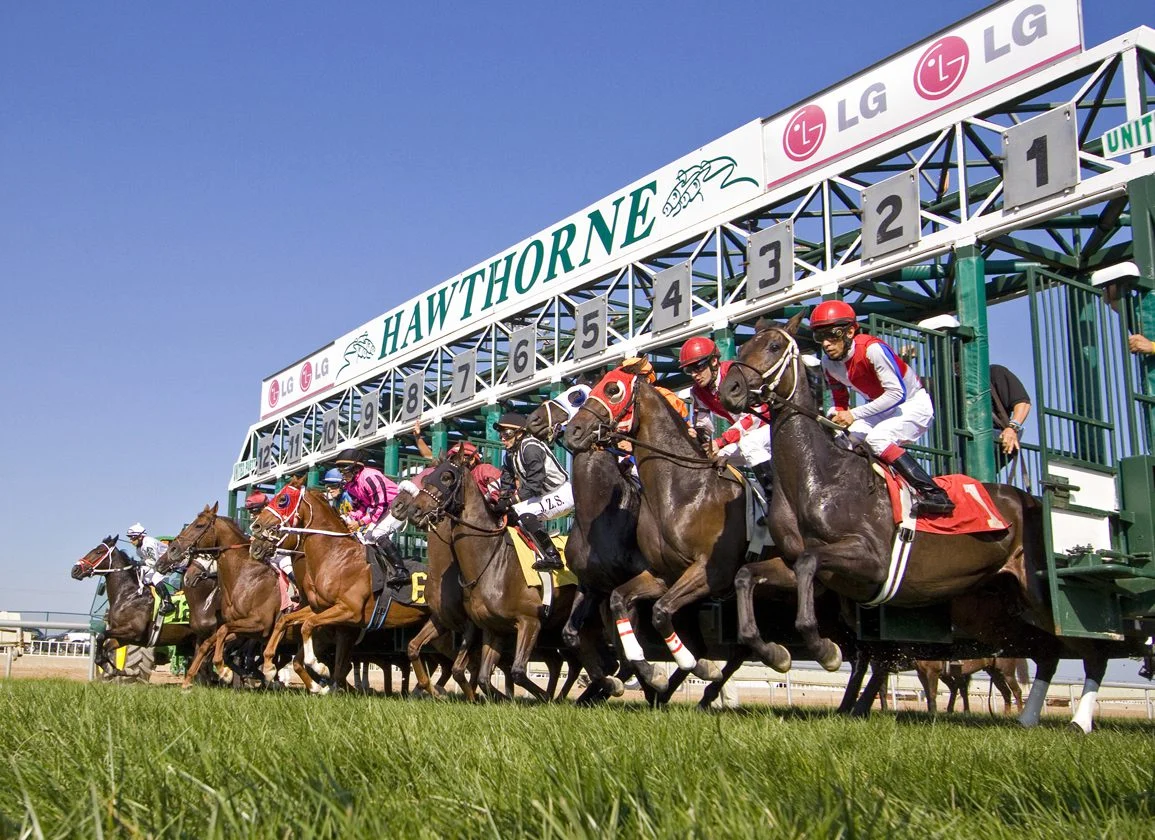
The storied history of Hawthorne Race Course, a cornerstone of the Illinois sporting landscape for more than a century, is rapidly approaching a definitive conclusion following a series of pivotal bankruptcy court hearings. A federal judge has issued verbal directions for the drafting of a final sale order that would transfer the property to a Delaware-based shell company for $90 million. This transition, which effectively signals the end of horse racing at the Stickney, Illinois, site, carries a stringent requirement: all humans and horses currently residing on the backstretch must vacate the premises by August 31. The move marks a somber turning point for the Chicago-area racing circuit, which has already been reeling from the 2021 closure of Arlington International Racecourse.
The court-approved sale comes after months of financial instability for the Carey family, who have owned and operated the track for 117 years. While a final written order had not yet been uploaded to the court’s electronic docket as of late July, the proceedings on July 24 made the terms of the deal clear. Ross Fiedler, an attorney representing the anonymous buyer, emphasized during the hearing that the clearing of the backstretch is an "absolute condition" of the closing, which is scheduled for the final day of August. This hard deadline leaves trainers, grooms, exercise riders, and hundreds of Thoroughbreds with a narrow window to find new accommodations and training facilities.
The Financial Mechanics of the Sale and Mitigation Efforts
The $90 million purchase price, while substantial, represents only a fraction of the debt Hawthorne Race Course has accumulated. When the track filed for Chapter 11 bankruptcy protection on February 27, it cited liabilities ranging between $100 million and $500 million. The move toward liquidation followed years of unsuccessful attempts to restructure debt and secure the necessary capital to transform the historic racing venue into a modern "racino"—a combination of a horse racing track and a full-scale casino.
Recognizing the immediate hardship the sale imposes on the backstretch community, the proposed draft order includes specific financial provisions intended to ease the transition. According to reports from Horse Racing Nation, the Carey family has agreed to pay $1 million from the sale proceeds to the Illinois Thoroughbred Horsemen’s Association (ITHA). Furthermore, an additional $900,000 has been earmarked for backside charities, sourced from settlements involving an architect and a construction firm previously engaged in the track’s redevelopment plans.
Chris Block, the president of the ITHA, noted that these funds are critical for the survival of the local racing community. The financial assistance is intended to provide a 30-day buffer, allowing horsemen to continue training through August and providing backstretch employees with the resources needed to secure housing outside of the racetrack. "That’s going to help us not rush our horsemen out of here," Block stated, acknowledging the logistical nightmare of relocating an entire racing ecosystem on such short notice.
A Century of Racing Tradition Ends in Insolvency
Hawthorne Race Course, founded in 1891 by Edward Corrigan, survived the Great Depression, two World Wars, and a devastating fire in 1970. For 117 years, the Carey family maintained the facility as one of the few remaining family-owned racetracks in North America. The track was known for its "grit," serving as a year-round hub for both Thoroughbred and Standardbred racing in the Midwest.
The decline of Hawthorne is inextricably linked to the broader challenges facing the Illinois racing industry. For decades, Illinois tracks lobbied the state legislature for the right to install slot machines and table games to compete with riverboat casinos and neighboring states like Indiana. When the Illinois Gambling Expansion Act was finally signed into law in 2019, it appeared to be a lifeline for Hawthorne. The track was granted a master sports wagering license and began the process of converting its grandstand into a casino.
However, the timing proved catastrophic. The onset of the COVID-19 pandemic, coupled with rising interest rates and skyrocketing construction costs, stalled the redevelopment. Hawthorne struggled to secure the hundreds of millions of dollars in private financing required to complete the casino project. As debt mounted and revenue from racing alone proved insufficient to cover operating costs and interest payments, the Carey family was forced into the bankruptcy court. The failure of the racino project effectively sealed the fate of the property, as the $90 million sale to a non-racing entity suggests the land will likely be repurposed for industrial or commercial development.
Chronology of the Hawthorne Bankruptcy Proceedings
The path to the August 31 vacancy deadline has been marked by several key legal and financial milestones:
- June 2019: Governor J.B. Pritzker signs the gambling expansion bill, authorizing Hawthorne to become a racino.
- 2020–2022: Hawthorne begins preliminary construction on the casino but faces repeated delays in securing long-term financing.
- February 27, 2024: Hawthorne Race Course files for Chapter 11 bankruptcy protection, reporting assets of $50 million to $100 million against liabilities of up to $500 million.
- May 2024: The court sets an auction date after no viable plan for internal restructuring is presented.
- July 2024: An auction is held, but no bids are received from entities intending to continue horse racing operations. A Delaware-based shell company emerges as the lead bidder with a $90 million offer for the real estate.
- July 22–24, 2024: A three-day hearing takes place in federal bankruptcy court to finalize the sale terms.
- August 31, 2024: The proposed closing date for the sale and the deadline for all personnel and livestock to vacate the property.
The Human and Equine Impact
The immediate concern for the Illinois racing community is the welfare of the horses and the livelihoods of the backstretch workers. Unlike professional athletes in other sports, backstretch workers often live in dormitory-style housing provided by the track. For many, Hawthorne is not just a workplace but a home. The August 31 deadline creates an urgent demand for affordable housing in the Chicago area, a market that is notoriously difficult to navigate for low-income seasonal workers.
For the horses, the closure of Hawthorne creates a vacuum in the racing calendar. With Arlington Park gone, Hawthorne was the last remaining major track in the Chicago metropolitan area. Thoroughbred trainers now face the prospect of moving their operations to Fairmount Park (now known as FanDuel Sportsbook and Horse Racing) in Southern Illinois, or leaving the state entirely for circuits in Indiana, Kentucky, or Minnesota.
The loss of the Chicago circuit is expected to have a "domino effect" on the state’s breeding industry. Without a premier venue to showcase Illinois-bred horses, the value of local stallions and mares is likely to plummet, further eroding the agricultural infrastructure that supports horse racing across the state.
Broader Implications for the Illinois Racing Industry
The sale of Hawthorne to a non-racing entity is more than just a real estate transaction; it is a symptom of a deeper crisis in the Illinois horse racing industry. For years, Illinois was considered a "premier" racing state, home to the prestigious Arlington Million and a robust year-round circuit. The departure of Churchill Downs Inc. from Arlington Park in 2021 was the first major blow. The impending closure of Hawthorne may be the final one.
Industry analysts point to a "perfect storm" of legislative delays, corporate shifts, and economic pressures. While other states, such as New York and Kentucky, have successfully integrated gaming revenue into racing purses to bolster the industry, Illinois’s efforts came too late for its historic tracks. The $1.9 million settlement for the ITHA and backside charities provides a temporary safety net, but it does not address the long-term question of where Chicago-based horsemen will go.
The Illinois Racing Board (IRB) now faces a difficult task in scheduling dates for 2025. If Hawthorne is no longer an option, the board may be forced to look at creative solutions, such as temporary facilities or a total reliance on Fairmount Park, though the latter lacks the stall capacity to house the entire Chicago colony.
Analysis of Future Land Use
While the identity of the buyer remains shielded behind a Delaware shell company, the $90 million valuation suggests that the 113-acre site is being eyed for its strategic location. Situated near major transit arteries and just miles from downtown Chicago, the property is prime real estate for logistics, warehousing, or mixed-use residential development.
The transition from a sports venue to a commercial hub is a trend seen across the country as aging racetracks are sold for their land value. In the case of Hawthorne, the failure to realize the racino dream meant the property was more valuable as a blank slate than as a functioning racetrack burdened by debt.
As the August 31 deadline approaches, the focus remains on the orderly transition of the backstretch. The $1.9 million in mitigation funds represents a hard-fought victory for the ITHA, ensuring that the final days of Hawthorne are marked by a degree of stability rather than a chaotic eviction. However, for the fans who have frequented the track for generations and the families who have dedicated their lives to the sport in Stickney, the finality of the court’s direction marks the end of an era that defined Illinois sports for over a century.
