

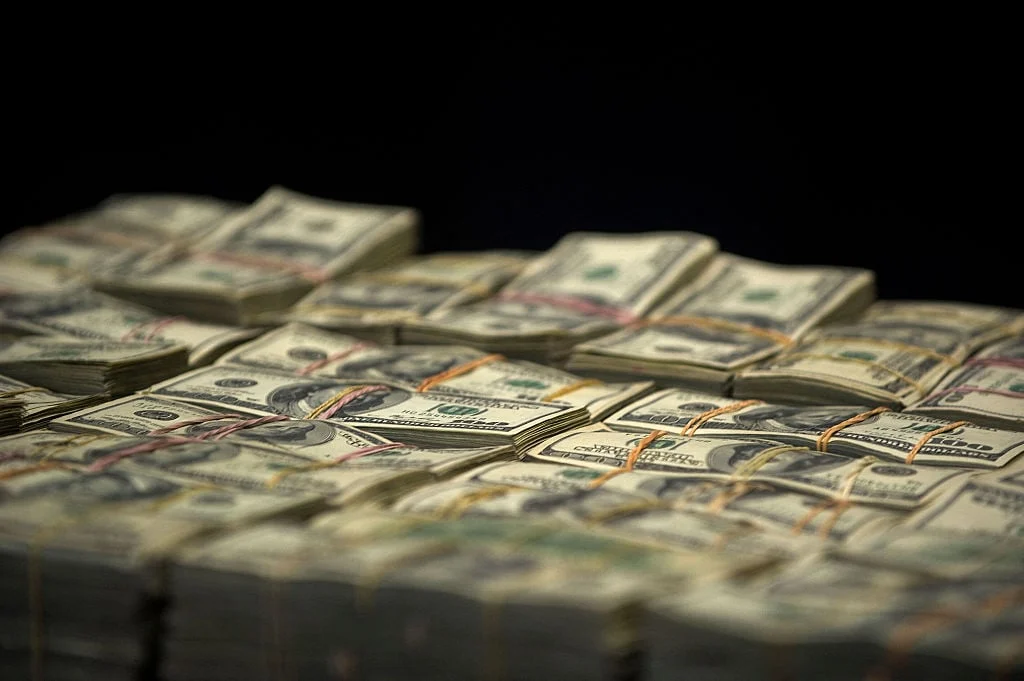
A St. Louis-based drug trafficker, Derek Rockette, has been handed a significant 15-year federal prison sentence after he admitted to gambling away over $1.5 million belonging to Mexico’s infamous Sinaloa Cartel. The sentence, delivered on July 22, 2026, in the Eastern District of Missouri, marks the culmination of a multi-year investigation into Rockette’s sophisticated drug distribution and money laundering operation, highlighting the perilous intersection of high-stakes crime and personal addiction. Rockette, 53, pleaded guilty in March 2026 to charges of conspiring to distribute cocaine and fentanyl, money laundering conspiracy, and possessing a firearm as a convicted felon, shedding light on the dangerous financial entanglements with one of the world’s most formidable transnational criminal organizations.
The Architect of a Perilous Scheme
Derek Rockette’s criminal enterprise spanned at least five years, from 2016 through 2021, during which he served as a key distributor of illicit narcotics in the St. Louis area. Federal prosecutors detailed how Rockette operated with a direct, albeit precarious, line to the Sinaloa Cartel, receiving substantial quantities of cocaine and fentanyl on credit. This arrangement meant Rockette was expected to distribute the drugs and funnel the significant proceeds back to his cartel suppliers. However, Rockette’s severe gambling addiction became the Achilles’ heel of his operation. Between 2017 and 2021, he squandered the cartel’s funds, racking up losses exceeding $1.5 million at various gambling establishments. This reckless dissipation of illicit wealth placed him in a uniquely dangerous position, owing a substantial sum to an organization renowned for its ruthless enforcement of debts and territorial control.
The gravity of Rockette’s misstep became clear when, after two years of escalating losses and mounting pressure, representatives of the Sinaloa Cartel reportedly traveled to St. Louis to confront him directly over the outstanding debt. This extraordinary measure underscores the cartel’s far-reaching influence and its willingness to deploy high-level personnel to resolve critical financial disputes, even in the heartland of the United States. Faced with the dire consequences of his actions, Rockette scrambled to repay the cartel, engaging in complex money laundering schemes to transfer funds back to Mexico and other international accounts.
Unmasking the Cartel’s Reach: The Sinaloa Organization
The Sinaloa Cartel, often regarded as one of the largest and most powerful drug trafficking organizations globally, played a central role in Rockette’s downfall. Founded in the late 1980s, the cartel rose to prominence under the leadership of Joaquín "El Chapo" Guzmán Loera and Ismael "El Mayo" Zambada García. Despite Guzmán’s incarceration, the cartel maintains a vast network spanning continents, with significant operations in the United States. Its primary illicit activities include the trafficking of cocaine, heroin, methamphetamine, and increasingly, fentanyl – a synthetic opioid significantly more potent than heroin and a major driver of the ongoing opioid crisis in North America.
The cartel’s operational model is characterized by its sophisticated logistics, extensive intelligence networks, and a brutal willingness to employ violence to protect its interests. It controls vast swathes of drug production, transportation routes, and distribution hubs, making it a formidable force in the global illicit drug trade. Its presence in American cities like St. Louis, as evidenced by Rockette’s direct connections, highlights the pervasive nature of its drug supply chains that infiltrate communities across the nation. The cartel’s ability to supply large quantities of drugs on credit speaks to its immense financial power and its strategy of cultivating long-term, high-volume distributors like Rockette.
A Chronology of Crime and Desperation
Rockette’s involvement with the Sinaloa Cartel began around 2016, marking the initiation of his large-scale drug distribution network. The timeline of his descent is critical to understanding the complexity of his criminal endeavors:
- 2016: Rockette establishes direct ties with Sinaloa Cartel suppliers, beginning to receive significant quantities of cocaine and fentanyl on credit. His operation in St. Louis expands.
- 2017-2021: Over these four years, Rockette’s gambling addiction intensifies, leading him to gamble away over $1.5 million of the cartel’s drug proceeds. This period sees him accruing massive debt to the ruthless organization.
- Late 2020 – Early 2021: As the debt accumulates and repayment deadlines are missed, Sinaloa Cartel representatives reportedly travel to St. Louis to confront Rockette. This direct intervention underscores the cartel’s concern over the lost funds and signals the extreme pressure Rockette was under.
- Early 2021 – March 2026 (Pre-Plea): Rockette engages in a desperate attempt to repay the cartel using various money laundering methods. This includes channeling funds through sophisticated Chinese and Mexican money-laundering networks. Prosecutors revealed that the Chinese network disguised drug proceeds by depositing money into accounts used to pay credit-card charges for airline tickets sold in China – a classic example of trade-based money laundering, which leverages legitimate commercial transactions to obscure illicit funds. Other repayments were funneled through Chicago or deposited into U.S. bank accounts before being transferred to Mexico. The amount owed to the cartel fluctuated as Rockette made repayments while simultaneously receiving fresh drug shipments, perpetuating the cycle of debt and distribution.
- March 25, 2019: Federal agents make their first significant approach to Rockette. He is found "gambling in the street" and attempts to evade arrest by fleeing and discarding a Glock 9mm pistol. After his apprehension, agents discover he is carrying over $10,000 in cash. As a previously convicted felon for marijuana trafficking (sentenced to five years), Rockette was legally prohibited from possessing any firearm, adding a critical charge to his growing list of offenses.
- 2021: St. Louis police conduct a vehicle stop on Rockette. During the stop, officers discover approximately $2,000 in cash, 236.26 grams of cocaine, 3.56 grams of fentanyl, and 12.4 grams of a mixture containing cocaine, heroin, and fentanyl. This discovery provides irrefutable evidence of his continued involvement in drug trafficking, even amidst his financial turmoil with the cartel.
- March 2026: Derek Rockette formally pleads guilty to conspiring to distribute cocaine and fentanyl, money laundering conspiracy, and possessing a firearm as a convicted felon.
- July 22, 2026: Rockette is sentenced to 15 years in federal prison, bringing an end to his criminal career.
Official Responses and Legal Arguments
The U.S. Attorney’s Office for the Eastern District of Missouri played a pivotal role in prosecuting Rockette, emphasizing the severity of his crimes and his unique position within the drug trafficking hierarchy. During the sentencing phase, prosecutors argued vehemently for the maximum sentence permitted under Rockette’s plea agreement, asserting that his case stood apart from those of mere couriers or low-level distributors.
"Very few drug traffickers in St. Louis have direct connections to the Sinaloa Cartel," prosecutors stated in court documents. This argument highlighted Rockette’s significant role, not just as a local dealer, but as a direct conduit for a major transnational criminal organization. His direct engagement with the cartel meant he was responsible for facilitating the entry of large quantities of dangerous drugs, including fentanyl, into American communities. The prosecution underscored that Rockette was not simply an unwitting participant but a key player in a high-stakes, international criminal network. His repeated engagement in drug distribution, even after facing immense pressure and encounters with law enforcement, demonstrated a persistent disregard for the law and public safety.
The federal sentence reflects the serious nature of the offenses and the government’s commitment to dismantling drug trafficking networks, particularly those with direct ties to cartels. The charges of money laundering conspiracy further illustrate the government’s strategy to target the financial infrastructure of drug operations, recognizing that depriving criminal organizations of their illicit proceeds is as crucial as seizing drugs and arresting traffickers.
Broader Implications: Fentanyl Crisis and Money Laundering Challenges
Rockette’s case serves as a stark illustration of several critical issues facing law enforcement and public health today.
The Fentanyl Crisis: The fact that Rockette distributed fentanyl is particularly alarming. Fentanyl, a synthetic opioid 50 to 100 times more potent than morphine, has been a primary driver of the opioid overdose epidemic in the United States. According to the Centers for Disease Control and Prevention (CDC), synthetic opioids (primarily fentanyl) were involved in over 70,000 overdose deaths in 2022, representing a significant portion of all drug overdose fatalities. Cartels like Sinaloa have increasingly shifted towards fentanyl production and trafficking due to its low cost of production, high potency, and ease of concealment, making it an incredibly lucrative commodity. Rockette’s role in distributing this deadly substance directly contributed to this public health crisis in St. Louis and surrounding areas.
Sophisticated Money Laundering: The details of Rockette’s money laundering activities underscore the evolving challenges in combating financial crime. The utilization of both Chinese and Mexican money-laundering networks highlights the globalized nature of illicit finance. Trade-based money laundering, such as using airline ticket sales in China, is a particularly insidious method because it co-opts legitimate commercial activities, making detection difficult. These networks exploit international trade systems, making it arduous for authorities to trace the origin and destination of funds. The Financial Crimes Enforcement Network (FinCEN) regularly issues advisories on these complex schemes, emphasizing the need for robust anti-money laundering (AML) protocols in financial institutions and businesses involved in international trade. Rockette’s case demonstrates how drug traffickers leverage these sophisticated mechanisms to repay debts and move vast sums of money across borders, often bypassing traditional banking systems.
Deterrence and Law Enforcement Strategy: The 15-year federal sentence sends a clear message to other drug traffickers, particularly those who establish direct connections with major cartels. It signals that federal authorities will pursue and prosecute individuals who act as high-level distributors, especially when their activities involve highly addictive and lethal substances like fentanyl. The prosecution’s emphasis on Rockette’s direct cartel ties suggests a strategic focus on disrupting the upper echelons of drug distribution networks within the U.S., aiming to sever the links between international cartels and local street-level operations.
St. Louis as a Hub: While the article does not provide specific data on St. Louis’s role, Rockette’s operation indicates the city’s significance within national drug distribution routes. St. Louis, situated at a major crossroads of interstates, has historically been a transit point and distribution hub for various illicit goods. This geographical advantage makes it an attractive location for cartels to establish local distribution networks, further entrenching the presence of organized crime in the region.
Derek Rockette’s case serves as a cautionary tale of greed, addiction, and the brutal realities of the global drug trade. His reckless gambling habit not only led to his personal downfall but also exposed the complex and dangerous mechanisms by which powerful cartels exert their influence and move their deadly products across international borders and into American communities. The federal sentence underscores the unwavering commitment of law enforcement to dismantle these networks and protect the public from the devastating impact of illegal narcotics and organized crime.
