

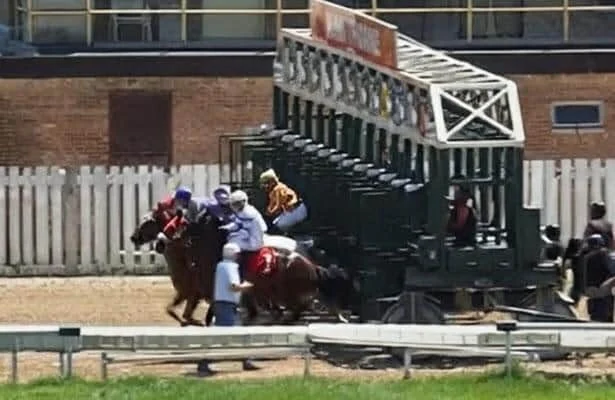
The United States Bankruptcy Court for the Northern District of Illinois has intervened in the escalating crisis at Hawthorne Race Course, with Judge Timothy Barnes ruling on Monday that the track’s backstretch facilities must remain open until at least August 31. This decision provides a critical, albeit brief, window of stability for approximately 500 backstretch workers and their families who reside on the property, as well as the roughly 500 horses currently stabled at the historic Stickney, Illinois, venue. The ruling comes as the venerable racing institution navigates a tumultuous bankruptcy process that has cast a long shadow over the future of Thoroughbred racing in the state of Illinois.
Judge Barnes, presiding over the increasingly contentious proceedings, grounded his decision in humanitarian and constitutional concerns rather than purely financial considerations. While Hawthorne’s management had aggressively lobbied for an expedited closure of the backstretch within a 14-day window, Barnes emphasized his judicial responsibility under the U.S. Constitution to safeguard the health and welfare of the individuals who call the track home. The judge expressed profound concern regarding the logistical impossibility of hundreds of workers—many of whom are lower-income and face limited housing options—finding alternative accommodations on such short notice.
"There’s more than just economic harm that is at risk here," Judge Barnes stated during the hearing, reflecting on the potential for a localized humanitarian crisis should the residents be summarily evicted. This sentiment highlights a rare moment where the human element of the "sport of kings" took precedence over the balance sheets of creditors and prospective buyers.
The Human and Equine Impact of the Backstretch Community
The backstretch of a major racetrack like Hawthorne is often described as a "city within a city." It is a self-contained ecosystem that supports the 24-hour care required for elite equine athletes. The 500 residents currently living at Hawthorne include grooms, hot walkers, exercise riders, and their immediate families. For many of these individuals, the backstretch provides not only a place of employment but also essential housing that is tied directly to their roles in the stable area.
The logistics of relocating 500 horses are equally daunting. Thoroughbreds require specialized transportation, veterinary oversight, and immediate placement in alternative training facilities. With the sudden closure of other regional tracks in recent years, the available "stall space" in the Midwest has tightened significantly. Forcing a mass exodus within 14 days, as Hawthorne’s legal team requested, would have likely resulted in significant animal welfare concerns and financial ruin for smaller stable owners who lack the resources to pivot their operations instantly.
A Contentious Legal Battle: 14 Days vs. Three Months
The Monday hearing, which spanned an entire day of testimony and legal maneuvering, was marked by sharp exchanges between representatives of the track and the horsemen who keep it operational. The central conflict pitted the Illinois Thoroughbred Horsemen’s Association (ITHA) against the current management of Hawthorne Race Course.
Kevin Morse, the attorney representing the ITHA, argued forcefully for an extension of backstretch operations through November 1. This timeline would have aligned with the traditional conclusion of the autumn racing season, allowing trainers and owners to fulfill their commitments and transition to winter circuits in a planned manner. Morse emphasized that the horsemen have been the lifeblood of the track and deserved a window of operation that respected their investment in the current meet.
In stark contrast, Barry Chatz, representing Hawthorne, maintained a rigid stance focused on the swift liquidation of assets and the cessation of liabilities. At one point during the afternoon session, the tension boiled over. Responding to the ITHA’s plea for more time, Chatz bluntly told the horsemen to "take your horses and go." This remark was seen by many in the industry as a sign of the deteriorating relationship between the track’s storied management and the community that has supported it for generations.
Historical Context: The Decline of an Illinois Landmark
To understand the weight of the Hawthorne bankruptcy, one must look at the broader landscape of Illinois horse racing. Founded in 1891, Hawthorne Race Course is the oldest family-owned and operated racetrack in North America. For over 130 years, it survived fires, economic depressions, and the changing tastes of the gambling public. However, the last decade has been particularly unkind to the Illinois circuit.
The closure of Arlington International Racecourse in 2021 by Churchill Downs Inc. left a massive void in the state’s racing calendar and shifted an immense burden onto Hawthorne. As the sole remaining major Thoroughbred track in the Chicago metropolitan area, Hawthorne was expected to carry the mantle of the industry. Plans were set in motion to transform the facility into a "racino"—a combination of a racetrack and a full-scale casino—following the 2019 Illinois gaming expansion law.
However, the transition proved more difficult than anticipated. Delays in licensing, rising construction costs, and the heavy debt load required to fund the transformation eventually led the facility into its current financial predicament. The bankruptcy filing represents a failure of the "racino" dream to materialize in time to save the traditional racing operations.
Financial Uncertainties and the Fate of Earned Purses
While the August 31 deadline provides a temporary reprieve for housing and stabling, several critical financial issues remain unresolved. Chief among these is the payment of purses. Purses are the prize money earned by owners, trainers, and jockeys for their performance in races. In the wake of the bankruptcy, many horsemen are left wondering if they will ever receive the funds they have already earned during the current meet.
The ITHA has confirmed that it is in active communication with the prospective buyer of the property, though the identity and long-term intentions of that buyer remain a subject of intense speculation. The horsemen’s association is also reportedly attempting to secure emergency bridge funding to maintain backstretch operations—such as security, water, and waste management—through the new August 31 deadline.
Furthermore, the status of upcoming racing dates is in limbo. While a racing program was scheduled to commence this coming Sunday, the track’s management has not provided a definitive guarantee that the gates will open. Without the assurance of purse payments and functional facilities, the ITHA may find it difficult to convince trainers to enter their horses.
Political and Legislative Reactions
The crisis at Hawthorne has caught the attention of state officials who recognize the track’s role as a major employer and an economic engine for the Stickney and Cicero areas. On Sunday, prior to the landmark hearing, a trio of state lawmakers issued a joint statement urging the court and the prospective new owners to exercise "compassion."
The lawmakers emphasized that the lives of hundreds of workers and the welfare of hundreds of animals should not be treated as mere line items in a bankruptcy ledger. There is growing concern in Springfield that the total collapse of Hawthorne would effectively end Thoroughbred racing in Northern Illinois, leading to the loss of thousands of secondary jobs in the agricultural and service sectors.
Timeline of Recent Events and Future Proceedings
The path to Monday’s ruling has been rapid and fraught with uncertainty:
- Early 2024: Financial pressures mount as Hawthorne struggles to secure the final tranches of funding for its casino conversion.
- Recent Weeks: Bankruptcy proceedings commence, with management seeking a quick exit from racing operations to facilitate a sale or restructuring.
- Sunday: State lawmakers issue a public plea for a humane transition period.
- Monday, 10:00 AM: The bankruptcy hearing begins before Judge Timothy Barnes.
- Monday afternoon: Heated exchanges occur between Hawthorne counsel Barry Chatz and ITHA counsel Kevin Morse.
- Monday evening: Judge Barnes issues the stay of eviction until August 31, citing constitutional protections for residents.
The next critical juncture in this legal saga is scheduled for Wednesday at 2:00 p.m. EDT. During this upcoming hearing, the court is expected to address the immediate viability of the racing schedule and the status of the purse accounts.
Analysis of Implications for the Illinois Racing Industry
The ruling to keep the backstretch open until August 31 is a bittersweet victory for the horsemen. While it prevents an immediate disaster, it essentially confirms that the end is near for the current era of Hawthorne. The three-month window is intended as a "glide path" to closure rather than a sign of a long-term revival.
If Hawthorne ceases racing operations permanently, the Illinois Thoroughbred industry faces an existential threat. Breeders who have invested in Illinois-foaled horses will have no local premier venue to showcase their stock. The "circuit" that once included Arlington, Hawthorne, and Sportsman’s Park would be reduced to a shadow of its former self, likely forcing the remaining horsemen to relocate to Indiana, Kentucky, or Arkansas.
The broader implication for the community is the loss of a historic landmark. Hawthorne has survived through the tenures of 24 U.S. Presidents. Its potential demise as a racing venue marks a significant shift in the cultural and economic fabric of the Chicago suburbs. As the legal proceedings continue on Wednesday, the focus will remain on whether the "prospective buyer" sees a future for the horses, or merely for the valuable real estate upon which the track sits.
For now, 500 families and 500 horses have been granted 90 days of certainty in an otherwise volatile environment. Whether that time is used to find a new home or to mount a final defense of the track remains to be seen.
