

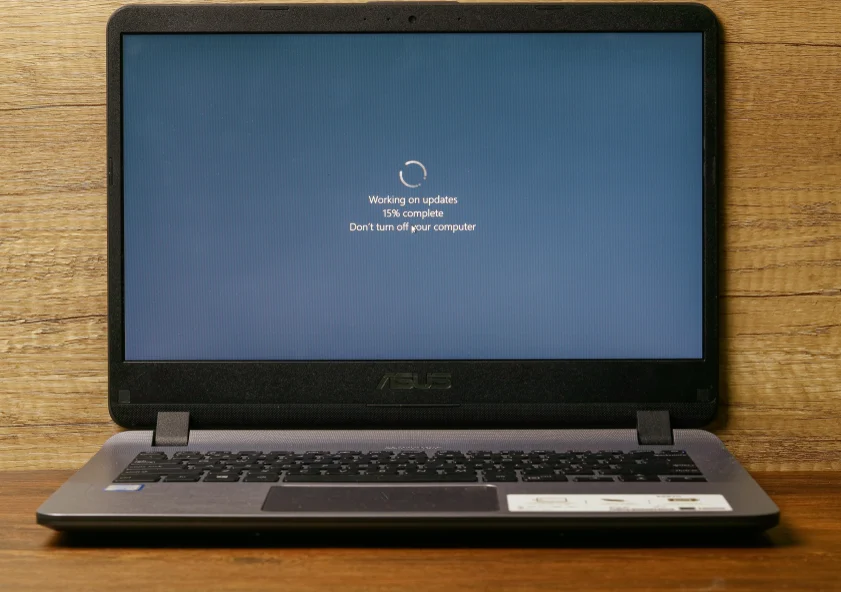
Microsoft Corp. released a historic wave of software updates today to address at least 570 security vulnerabilities across its Windows operating systems and associated software ecosystem, a figure that nearly triples the previous record set only last month. This unprecedented volume of security fixes signals a fundamental shift in the cybersecurity landscape, which Microsoft executives attribute directly to the integration of artificial intelligence in the vulnerability discovery process. As both defenders and adversaries increasingly leverage machine learning to scan code for weaknesses, the traditional "Patch Tuesday" cycle is evolving into a high-velocity race for digital dominance.
The July 2026 update package includes nearly 60 vulnerabilities classified as "critical," the highest severity rating utilized by the software giant. These flaws are particularly hazardous because they allow for remote code execution, enabling malicious actors or automated malware to seize full administrative control over a Windows device with little to no interaction from the user. Beyond the sheer volume of fixes, Microsoft also confirmed the remediation of three zero-day vulnerabilities, two of which were identified as being actively exploited in the wild at the time of the release.
A Deep Dive into the July 2026 Vulnerability Landscape
The primary focus for many IT administrators this month will be the massive influx of elevation of privilege (EoP) vulnerabilities. Approximately 250 of the 570 fixes involve EoP flaws, which allow an attacker with limited access to a system to gain higher-level permissions, effectively bypassing security boundaries. Among the most significant are CVE-2026-56155 and CVE-2026-56164.
CVE-2026-56155 targets Active Directory Federation Services (ADFS), a critical component for many enterprise identity management systems. An exploit in this area could allow an attacker to manipulate authentication tokens or gain unauthorized access to cloud-based resources. Meanwhile, CVE-2026-56164 addresses a vulnerability in Microsoft SharePoint, a platform ubiquitous in corporate environments for document management and collaboration. Because SharePoint often houses a company’s most sensitive internal data, this zero-day flaw represents a high-priority target for corporate espionage and ransomware groups.
Another notable inclusion in the patch set is CVE-2026-50661, a security feature bypass vulnerability within Windows BitLocker. BitLocker is the primary encryption tool used to protect data on Windows drives. According to Microsoft, this specific bug could allow an attacker to gain access to encrypted data if they have physical access to the device. While Microsoft noted that details of this vulnerability have been shared publicly, they have not yet seen evidence of active exploitation. However, for organizations with high-risk mobile workforces, the potential for data theft from lost or stolen laptops makes this a critical fix.
The AI Factor: Accelerating Discovery and Analysis
The staggering increase in the number of vulnerabilities—from roughly 200 in June to 570 in July—has sparked intense discussion within the cybersecurity community. Pavan Davuluri, Microsoft’s Executive Vice President of Windows and Devices, addressed this surge in a formal blog post, explaining that the industry has entered an era of "AI-powered discovery."
"The pace of vulnerability discovery is changing with advances in AI making it possible to find more issues, faster, across more code," Davuluri wrote. He emphasized that Microsoft is now employing new mechanisms that accelerate both the discovery and the deep analysis of software flaws. By utilizing Large Language Models (LLMs) and advanced fuzzing techniques, security researchers can now identify edge cases and complex logic errors that were previously invisible to human auditors or traditional automated scanners.
This technological leap is not limited to Microsoft’s internal teams. Independent researchers and bug bounty participants are also utilizing AI tools to scan Microsoft’s vast codebase. While this leads to a more secure product in the long term, it creates a massive short-term burden for IT departments tasked with testing and deploying hundreds of patches simultaneously.
Critical Flaws in the AI Frontier: Microsoft Copilot
As Microsoft integrates AI into its products, those AI tools themselves have become targets. Jack Bicer, Director of Vulnerability Research at Action1, highlighted CVE-2026-48561 as one of the most significant threats in the July release. This remote code execution (RCE) flaw resides in Microsoft Copilot and carries a near-perfect CVSS threat score of 9.6.
The vulnerability allows an unauthorized attacker to execute code over the network. The attack vector is particularly insidious: an attacker could host a malicious website that, when visited by a user via Microsoft Edge for Android, automatically sends specially crafted prompts to the Copilot interface. This interaction triggers the exploit, potentially allowing the attacker to steal data or compromise the mobile device. This case highlights the new "prompt injection" and "AI-orchestration" attack surfaces that organizations must now defend.
Rethinking the Exploitability Index
The rapid pace of discovery has also called into question the traditional metrics used to prioritize patches. For years, Microsoft has used its "Exploitability Index" to help users understand the likelihood of a vulnerability being weaponized. However, Satnam Narang, a senior staff research engineer at Tenable, argues that these ratings are becoming obsolete in the age of AI.
Narang pointed to the SharePoint zero-day (CVE-2026-56164), which Microsoft originally labeled as "Exploitation Less Likely." Despite this rating, the flaw was added to the Cybersecurity and Infrastructure Security Agency (CISA) Known Exploited Vulnerabilities (KEV) list on July 1, proving that attackers had already found a reliable way to use it.
"Our way of looking at Patch Tuesday has changed because the exploitability index is centered around humans, not AI tools," Narang stated. To support this, he cited recent findings from the Anthropic Red Team. Using their "Mythos Preview" AI model, researchers were able to generate working proof-of-concept exploits for 13 out of 14 vulnerabilities that human analysts had rated as "unlikely" to be exploited. This suggests that AI can bridge the gap between a theoretical bug and a practical weapon much faster than previously thought, rendering human-centric risk assessments increasingly fragile.
Chronology of the July Security Cycle
- July 1, 2026: CISA adds the SharePoint vulnerability (CVE-2026-56164) to its KEV catalog, signaling that federal agencies must patch the flaw immediately due to active exploitation.
- July 4-7, 2026: Reports emerge from private security firms regarding a spike in targeted attacks against Active Directory Federation Services, later linked to CVE-2026-56155.
- July 9, 2026 (Morning): Microsoft officially releases the 570-patch payload. Executive VP Pavan Davuluri publishes a manifesto on the necessity of evolving vulnerability management to meet AI-driven speeds.
- July 9, 2026 (Afternoon): Major software vendors, including Adobe and Cisco, release concurrent updates, following a new industry trend of synchronized, high-volume security releases.
- July 10, 2026: IT administrators globally begin reporting the logistical challenges of deploying the record-breaking update, with some opting for a "staged rollout" to mitigate stability risks.
An Industry-Wide Shift in Patch Cadence
Microsoft is not the only company grappling with the "AI explosion" in software flaws. Chris Goettl, Vice President of Security Product Management at Ivanti, noted that the entire software industry is being forced to increase its patch cadence.
Adobe recently announced a shift to a bi-monthly security bulletin schedule, moving away from its traditional monthly release to provide updates on the second and fourth Tuesday of every month. Adobe specifically cited the use of AI in its development pipeline as both a source of discovery and a tool for faster remediation. Similarly, Google’s security updates for June 2026 exceeded 900 fixes across its various platforms. Cisco, Mozilla, and Oracle have also moved toward more frequent, smaller batches of updates to avoid the "patch overload" seen in Microsoft’s 570-fix release.
Implications and Strategic Recommendations
The sheer volume of the July 2026 Patch Tuesday serves as a wake-up call for enterprise security strategies. The traditional "wait and see" approach, where administrators delay patches for weeks to ensure system stability, is becoming increasingly dangerous as the window between patch release and exploit availability (the "N-day" window) shrinks to hours or minutes.
Security experts recommend the following actions in response to this record-breaking release:
- Prioritize the "Big Three": Focus first on the zero-days (SharePoint and ADFS) and the high-severity Copilot RCE flaw. These represent the most immediate paths for attackers to breach a network.
- Implement Automated Testing: Given the 570 patches, manual testing is no longer feasible. Organizations must invest in automated sandbox environments to test patch stability against their specific software stacks.
- Enhance Physical Security for Mobile Devices: With the BitLocker bypass identified, organizations should reinforce physical device security protocols and consider additional layers of data protection for remote employees.
- Adopt Machine-Speed Defense: As Narang suggested, if attackers are using AI to find exploits, defenders must use AI to prioritize their responses. Relying on static exploitability scores is no longer sufficient; real-time threat intelligence and behavioral analytics are required to identify which of the 570 flaws are being targeted in a specific environment.
As Microsoft and its peers continue to leverage AI, the number of patches per release is expected to remain high. While this "record-smashing" July release may seem like an anomaly, it likely represents the new baseline for cybersecurity in an automated world. The challenge for the future will not be finding the bugs, but finding the time and resources to fix them before the machines do.
