

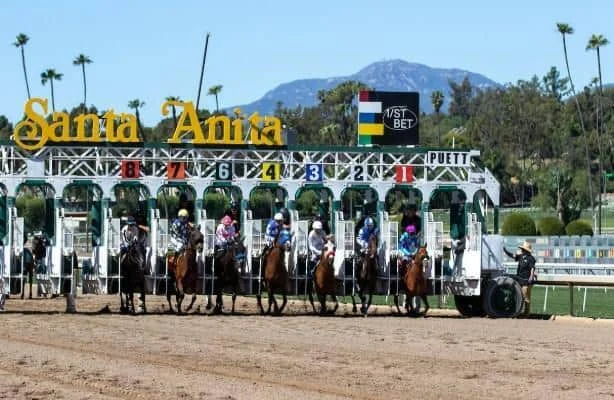
The elite circuit of Southern California Thoroughbred racing returns to its historic home this weekend as Santa Anita Park launches its highly anticipated 30-day spring meet. Running through June 14, the stand is anchored by a robust schedule of 27 stakes races designed to showcase the premier talent in the region across various surfaces and distances. This seasonal transition represents a critical juncture for the California racing industry, bridging the gap between the winter-spring classic meet and the summer circuit at Del Mar. The upcoming schedule is not merely a collection of races but a curated series of events that includes high-profile Grade 1 contests, a celebratory atmosphere surrounding the 152nd Kentucky Derby, and a dedicated day honoring the excellence of California-bred athletes.
The spring meet serves as the backdrop for Santa Anita’s continued role as a primary hub for Triple Crown contenders. This year, the focus remains fixed on So Happy, the definitive winner of the Santa Anita Derby, who is slated to carry the expectations of the West Coast to Churchill Downs on May 2. As the local favorite prepares for the "Run for the Roses," Santa Anita will host an expansive Kentucky Derby party, allowing on-track fans to witness the action from Kentucky while enjoying a live card headlined by the Grade 2 Charles Whittingham Stakes.
Opening Weekend Logistics and Initial Stakes Action
The meet commences with a powerful two-day opening weekend that emphasizes the diversity of Santa Anita’s racing surfaces. On Saturday, the featured event is the Grade 3 American Stakes, a one-mile turf contest for older horses that historically serves as a springboard for the prestigious Shoemaker Mile later in the meet. Joining the American Stakes on the Saturday program is the John Shear Stakes, named in honor of the legendary Santa Anita paddock guard. This race, restricted to three-year-olds, utilizes the venue’s unique hillside turf course, where sprinters must navigate a right-hand turn and cross the main dirt track before returning to the grass for a 6 1/2-furlong dash.
Saturday’s program is scheduled as a 10-race card with a first post time of 4 p.m. EDT (1 p.m. local time). The momentum continues into Sunday with a nine-race card, also beginning at 4 p.m. EDT. The Sunday feature is the Grade 3 Santa Maria Stakes, a 1 1/16-mile dirt test for fillies and mares. The Santa Maria has long been a foundational race for the distaff division in California, often attracting champions and future Breeders’ Cup contenders.
Weather Adjustments and Schedule Enhancements
In a move to accommodate horsemen and provide additional betting opportunities, Santa Anita management has added an extra day of racing on Thursday, April 30. This addition serves as a makeup date for cancellations experienced during the winter-spring meet due to inclement weather. The decision reflects a commitment to maintaining the integrity of the racing calendar and ensuring that owners and trainers have sufficient opportunities to run their horses after the disruptions of the rainy season.
The schedule for the first weekend of May has also been adjusted to align with the national television broadcasts of the Triple Crown events. On Friday, May 1, the focus shifts to the Kentucky Oaks, the premier race for three-year-old fillies. This year, Santa Anita Oaks winner Meaning will represent the California contingent at Churchill Downs. Because the Kentucky Oaks has been assigned a later post time of 8:40 p.m. EDT, Santa Anita has shifted its own first post on that Friday to 6:15 p.m. EDT. This allows local fans to participate in a "twilight" racing program while staying for the live wagering and viewing of the Oaks.
The Significance of the California-Bred Program
On May 23, the focus turns inward to the strength of the local breeding industry with a day dedicated to California-bred or sired horses. This "Gold Rush" style program features five stakes races with total purses exceeding half a million dollars. The centerpiece of the day is the $125,000 Snow Chief Stakes, a 1 1/8-mile turf test for three-year-olds, and its counterpart, the $125,000 Melair Stakes for three-year-old fillies at 1 1/16 miles on the turf.
Supporting these marquee events are the Thor’s Echo Stakes, a six-furlong dirt sprint; the Fran’s Valentine Stakes, a one-mile turf route for fillies and mares; and the Crystal Water Stakes for older horses at a mile on the grass. These races are vital to the California Thoroughbred Farm Managers and Breeders Association, as they provide high-value targets for owners who invest in the state’s bloodstock. By highlighting these races on a single high-profile Saturday, Santa Anita reinforces the economic importance of the local breeding sector.
Memorial Day: A Grade 1 Doubleheader
Memorial Day, Monday, May 25, traditionally marks one of the most significant dates on the North American racing calendar. Santa Anita’s Memorial Day program is headlined by two Grade 1 turf races, each carrying a $300,000 purse: the Shoemaker Mile and the Gamely Stakes. The Shoemaker Mile is a "Win and You’re In" event for the Breeders’ Cup Mile, often attracting the top turf milers in the country. The Gamely Stakes, contested at 1 1/8 miles, serves as the premier spring test for fillies and mares on the grass.
In addition to the Grade 1 action, the holiday card features the Grade 2 Hollywood Gold Cup. A race with a storied history dating back to the 1930s at the now-defunct Hollywood Park, the Gold Cup is a 1 1/4-mile test on the dirt for older horses. It remains one of the most prestigious staying races in the United States, with a winners’ list that includes legends such as Seabiscuit, Citation, and Affirmed. The inclusion of the Gold Cup alongside the Grade 1 turf races makes Memorial Day the competitive pinnacle of the spring meet.
The San Juan Capistrano and Closing Day Traditions
The 30-day stand concludes on Sunday, June 14, with the running of the Grade 3 San Juan Capistrano Stakes. First run in 1935, the San Juan Capistrano is one of the few remaining "marathon" races in American turf racing, contested at a distance of approximately 1 3/4 miles. The race is unique for its starting point at the top of the hillside turf course; horses must navigate the downhill section, cross the dirt, and then complete a full lap of the main turf oval.
The San Juan Capistrano has maintained its status as a fan favorite due to the tactical demands it places on both horses and jockeys. It requires a rare combination of stamina and agility. The race serves as a fitting finale to the meet, embodying the history and architectural uniqueness of Santa Anita Park.
Industry Context and Economic Implications
The success of the Santa Anita spring meet is a critical indicator of the health of the California racing circuit. Following a winter period that saw significant rainfall and track maintenance challenges, the spring meet offers a more stable environment for turf racing, which has become an increasingly popular segment of the wagering market. The 27 stakes races are strategically placed to ensure that the "Santa Anita brand" remains competitive with East Coast tracks like Belmont Park and Churchill Downs.
From an analytical perspective, the shift in post times for the Kentucky Oaks and the addition of the makeup day on April 30 suggest a data-driven approach to scheduling. By aligning local racing with national events, Santa Anita maximizes its "simulcast handle"—the money wagered at other tracks on Santa Anita’s races—and on-track attendance. The presence of high-quality contenders like So Happy and Meaning in the Triple Crown races further boosts local interest and provides a "home team" narrative that drives engagement.
Furthermore, the emphasis on turf racing during this meet reflects a broader trend in the industry. As dirt surfaces require intensive maintenance and are more susceptible to weather-related issues, the turf course at Santa Anita has become the centerpiece of the spring schedule. With 27 stakes on the horizon, the track is positioned to attract top-tier outfits from across the country, ensuring that the quality of competition remains at an elite level.
As the gates open this Saturday, Santa Anita Park continues to uphold its reputation as "The Great Race Place." With a blend of historic stakes, Triple Crown festivities, and a commitment to the local breeding industry, the 2026 spring meet stands as a pivotal chapter in the ongoing narrative of California Thoroughbred racing.
