

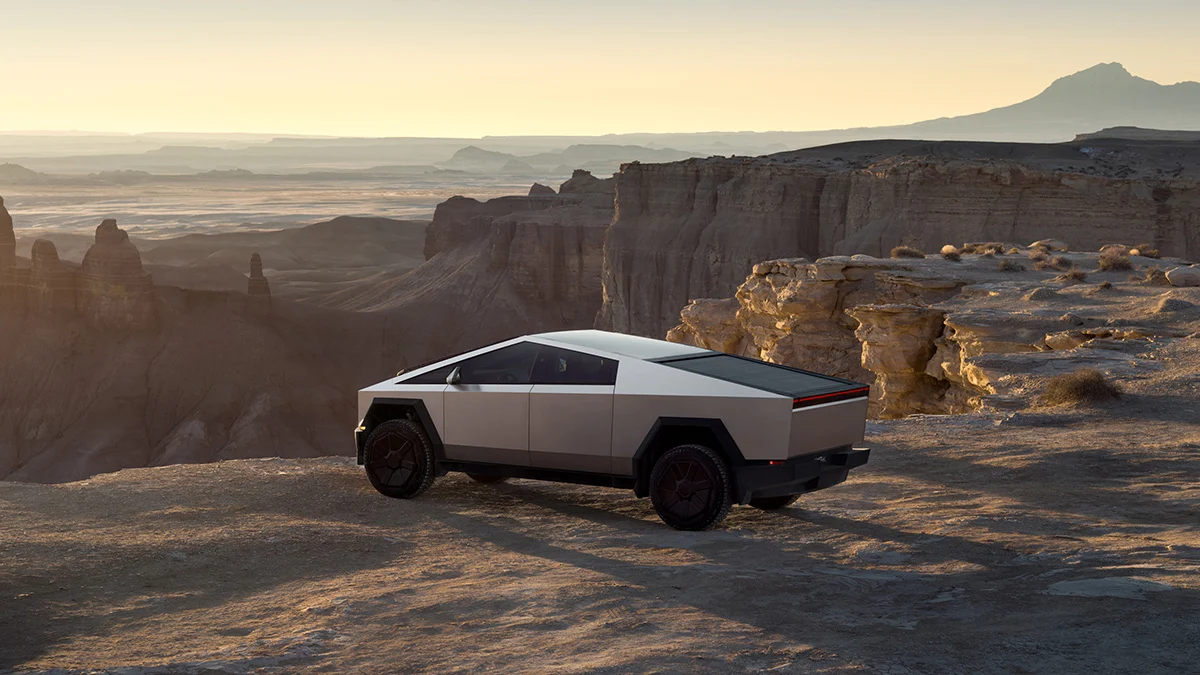
Recent sales figures for Tesla’s highly anticipated Cybertruck reveal a more complex picture than initially presented, with data indicating a significant reliance on purchases from other companies owned by its visionary CEO, Elon Musk. This revelation, first reported by Bloomberg, casts a spotlight on the electric pickup’s struggle to capture the broader consumer market, despite Musk’s own fervent endorsements. The polarizing design and premium pricing of the Cybertruck appear to be key factors contributing to a lukewarm reception from the general public, a stark contrast to Musk’s earlier prediction that it would be "the coolest car I’ve ever seen."
Internal Transfers Mask Public Demand Shortfall
Analysis of registration data provided by S&P Global Mobility for the fourth quarter of 2025 unveils a crucial detail: a substantial portion of Cybertruck sales originated from within Musk’s vast business empire. SpaceX, a prominent aerospace manufacturer also led by Musk, was responsible for registering 1,279 Cybertrucks, accounting for over 18 percent of the total 7,071 units sold in the U.S. during that period. Further bolstering these numbers, Musk’s other ventures, including the artificial intelligence firm xAI (which was integrated into SpaceX in February 2026), Neuralink, and The Boring Company, collectively acquired an additional 60 Cybertrucks.
This means that nearly one in every five Cybertrucks registered in the final quarter of 2025 effectively represented an internal transfer of assets within Musk’s corporate ecosystem, rather than a direct acquisition by an independent consumer. While the specific financial terms of these inter-company transactions remain undisclosed, considering the Cybertruck’s starting price of approximately $70,000, these purchases alone could represent a valuation exceeding $100 million. The trend of sales to Musk-affiliated companies has not abated in 2026; during the first two months of the year, these same entities purchased an additional 225 Cybertrucks, underscoring a continued internal demand.
A Stark Contrast to Pre-Launch Expectations
The implications of this internal sales boost are significant. Without the substantial contributions from Musk’s other enterprises, the Cybertruck’s sales figures for the fourth quarter of 2025 would have experienced a considerable year-over-year decline of 51 percent. This performance falls far short of Musk’s ambitious projections, as he had previously forecasted that Tesla would need to produce 250,000 Cybertrucks annually to meet anticipated demand. Over its more than two years on the market, the reality has been a significant divergence from this optimistic outlook.

Several factors are widely believed to be contributing to this disconnect between expectation and reality. The Cybertruck’s radical, angular design, while intentionally unconventional, has proven to be a polarizing element, alienating a segment of potential buyers. Concerns have also been raised by industry experts regarding the vehicle’s pedestrian safety, with its sharp edges and unconventional frontal design posing potential risks. Furthermore, the initial pricing strategy, which was higher than many industry observers had anticipated for a production vehicle, likely presented a barrier for some consumers. Compounding these issues, the Cybertruck has faced a number of recalls since its market introduction, further potentially impacting consumer confidence.
Expert Commentary Highlights Market Challenges
Industry analysts are observing these developments with keen interest. Sam Fiorani, vice president of global forecasting at AutoForecast Solutions, provided a candid assessment to Bloomberg, stating, "Tesla is running out of buyers for the Cybertruck." This sentiment suggests that the external market’s appetite for the electric pickup may be reaching its saturation point, necessitating creative internal solutions to maintain sales momentum.
Broader Implications for Tesla’s Market Position
The Cybertruck’s performance is not merely an isolated concern for Tesla; it reflects a broader challenge facing the company. Tesla has experienced a decline in its overall sales for three consecutive years, a period during which BYD, a Chinese automotive giant, has surpassed Tesla to become the world’s largest seller of electric vehicles. This shift in market leadership underscores the increasing competition and the need for Tesla to maintain strong sales across its entire product portfolio.
In response to these headwinds, Elon Musk has been attempting to pivot Tesla’s strategic focus towards more forward-looking, ambitious projects. However, the development timelines for these innovations, such as the much-discussed robotaxi fleet and the humanoid Optimus robot, remain years away from widespread commercialization. This leaves Tesla in a precarious position, needing to demonstrate consistent sales growth from its current product offerings while simultaneously investing heavily in future technologies. The Cybertruck’s lukewarm market reception, therefore, represents not only a missed opportunity for a flagship product but also a potential indicator of broader market dynamics influencing Tesla’s future trajectory.
A Timeline of the Cybertruck’s Market Entry and Sales
The concept of the Cybertruck was first unveiled by Tesla in November 2019, generating significant buzz and a reported 200,000 pre-orders within its first week. The vehicle’s unconventional stainless-steel exoskeleton and futuristic design immediately set it apart from traditional pickup trucks. Production officially commenced in late 2023, with initial deliveries beginning in November of that year.

The early months of production were characterized by limited output as Tesla worked to scale up manufacturing of the unique materials and processes involved in building the Cybertruck. The fourth quarter of 2025, the period under specific scrutiny, marked a significant point in its market presence, approximately two years after its official launch. The data from S&P Global Mobility, covering the period from October to December 2025, provides a snapshot of its sales performance at this critical juncture. The continued sales to Musk’s companies in early 2026 suggest that this strategy to bolster numbers has been ongoing beyond the Q4 2025 period.
Analysis of Design and Pricing Factors
The Cybertruck’s design, a key element of its initial appeal and subsequent controversy, can be analyzed through several lenses. Its sharp, angular, and minimalist aesthetic departs radically from the conventional curves and robust forms of traditional pickup trucks like the Ford F-150 or Chevrolet Silverado. While this avant-garde approach has garnered a dedicated following, it has simultaneously alienated a significant portion of the market that prefers more established and familiar truck designs. The use of a cold-rolled stainless-steel exoskeleton, while offering durability and corrosion resistance, also contributes to the vehicle’s unique, almost industrial, appearance.
The pricing of the Cybertruck has also been a subject of considerable discussion. While Tesla initially aimed for competitive pricing, the final production models, particularly the higher-trim variants, have commanded premium prices. This positions the Cybertruck in a segment that may have a smaller addressable market, especially when considering the additional factors of its polarizing design and the availability of more conventional, albeit less futuristic, electric truck options from competitors. The reported recalls, which have included issues related to the accelerator pedal and brake caliper, can further erode consumer confidence and deter potential buyers, particularly for a vehicle with a high price point and novel engineering.
The Competitive Landscape of Electric Pickups
The electric pickup truck market has become increasingly competitive since the Cybertruck’s unveiling. Ford was an early entrant with the F-150 Lightning, a production vehicle that directly translates the popular F-150 gasoline model into an electric platform, appealing to a broad base of existing truck buyers. Chevrolet has also entered the fray with its Silverado EV, offering a more traditional design and a range of configurations. Other manufacturers, such as Rivian with its R1T, have also established a presence in the premium electric truck segment, offering a blend of performance, utility, and sophisticated design.
Against this backdrop, the Cybertruck’s unconventional approach faces a market that, while growing, is also becoming more discerning. The success of competitors like the F-150 Lightning and Silverado EV suggests that a significant portion of the market still values familiarity and practicality in their truck purchases, alongside the benefits of electric propulsion. The Cybertruck’s challenge, therefore, lies in carving out a sustainable niche for its radical vision in a segment that is increasingly populated by more conventional, yet equally capable, electric alternatives. The reliance on internal company purchases suggests that, for now, the broader consumer market has not fully embraced this distinct vision, leaving Tesla to navigate the complexities of scaling production and demand for its most unconventional vehicle to date.
